It’s not about the chemical companies, it’s about elections

As I am sure you already know, it is really not about the chemical companies.  Nor is it about affordable housing or raising the minimum wage, or protecting water and the environment.  It’s about interests, not issues.  And it is about elections.

It’s about electing political leaders who care deeply about protecting and enhancing the public’s interest, the interests of people and the environment.

The issues are only symptoms, and too often victims of a much deeper problem. Our political institutions operate today in a manner clearly biased toward serving the interests of those in positions of wealth and power.  This fundamental truth is not unique to Hawaii, but I believe we in Hawaii have the people power and the momentum in place, to flip the power structure on its head and be a model for communities everywhere.

So today, we pivot and attack with vengeance, commitment and unrelenting perseverance, our next monumental task.

We have before us an opportunity to elect into public office a new generation of civic leaders who understand the importance of integrity based decision making and who are committed to putting public benefits and protections, ahead corporate power and entitlement.

The Pono Hawaii Initiative (PHI) of which I am the executive director, is working in collaboration with other organizations on each island to support candidates statewide who represent these values and if elected to public office have the capacity to change the very nature of the way government works in Hawaii.

I offer you today my personal pledge to put every ounce of my energy into this effort, and ask you to join me.  Collectively, we as a community have fought hard for change and justice, and  have taken on many important tasks and battles over the years.  And yes, when we put our heart and soul into the effort, we win.

PHI will be supporting the campaigns of at least 12 candidates for election to the House and Senate, and as many as another 10 Council candidates (representing each County).  We have in place the administrative structure, the experience and the relationships with other organizations around the State to can make this happen.

To support these candidates and win, will take money and people, but frankly at this point money is the most important element.  Absentee voting for the all-important primary election will begin within 60 days.  This means we must move ahead quickly to finalize strategies, produce materials (media etc) and begin extending support to candidates.

Our goal is to extend the maximum support possible to each candidate we endorse.  Please help today if you can. Donations of any amount to PHI whether $20, $200, $2,000 or $20,000 are welcome and very much needed.  I cannot over-emphasize the need for your help with this today, and if at all possible prior to May 11, when important strategic decisions must be made.

Donations can be made here: https://ponohawaiiinitiative.org/donate/

Volunteers are welcome and needed also: https://ponohawaiiinitiative.org/join/

Our entire official endorsement slate will be announced soon, but for starters below are 4 candidates who when elected, I know will change the world as we know it in Hawaii politics.

As always, I am more than happy to meet in person with anyone, on any island who is interested in actively supporting our effort to make positive change happen for Hawaii in 2018.  To those with the capacity to give, we need your help now.

Sincerely,

Gary Hooser – Executive Director Pono Hawaii Initiative
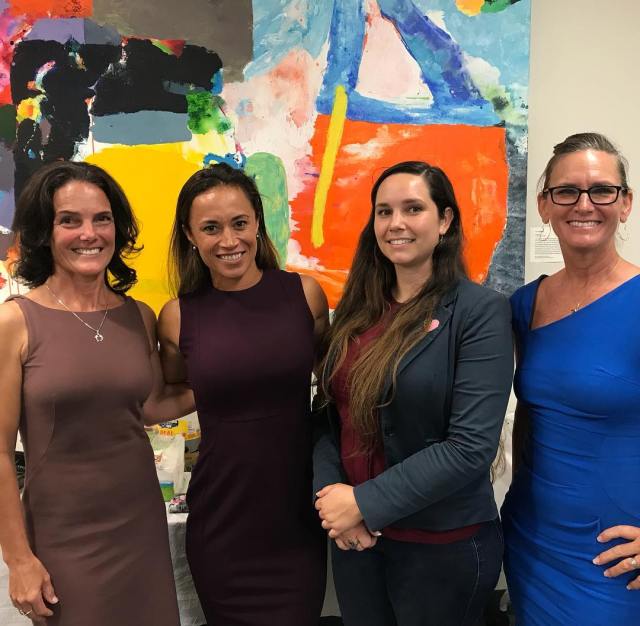
 

4 wahine candidatesleft to right in photo

Amy Perruso https://www.amyperruso.com/  State House District #46 Wahiawa

Tiare Lawrence https://www.tiare4maui.com/  State House District #12 Spreckelsville, Pukalani, Makawao, Kula, Keokea, Ulupalakua, Kahului

Natalia Hussey-Burdick https://www.nataliaforhawaii.com/about State House District #49 Kaneohe, Maunawili and Olomana

Tina Wildberger https://www.tinawildberger.com/ State House District #11 Kihei, Wailea, Makena

* Each of these candidates is of high integrity, and will represent their district and the entire state of Hawaii in a manner in which we can be proud, of this I am certain.  And yes, I encourage you also to make donations directly to these candidates as well as to PHI, if you have the capacity to do so.  gh

Posted in Uncategorized | Leave a comment

Regulating The AgroChemical Industry – A Five Year Journey

The passage yesterday of SB3095CD1 marks an auspicious moment in the legislative history surrounding pesticide regulation in Hawaii. Now on its way to the desk of Governor David Ige, SB3095CD1 contains a “first in the nation” ban on the use of chlorpyrifos, phased in gradually over 4 years.  Chlorpyrifos is a Restricted Use Pesticide (RUP), a neurotoxin that was originally developed to be used as a nerve gas in World War II and is highly dangerous to children and pregnant women. Chlorpyrifos is used through-out Hawaii in industrial agriculture.  In addition the measure contains a statewide RUP reporting mandate and other important protections.

These two components, a ban on chlorpyrifos and robust reporting of RUP usage alone represent a dramatic improvement to existing Hawai’i laws.

A bit of history and context is in order.  As most who follow this issue already know, after several years of mounting health concerns, school children getting sick, sea urchins dying and community lawsuits being filed, on June 26, 2013 Bill 2491 was placed on the Kauai County Council’s agenda.  Bill 2491 required the disclosure of RUP’s, buffer zones around sensitive areas, and a health and environmental impact study. In the interest of full disclosure, Bill 2491 was co-introduced by myself and Councilmember Timothy Bynum (now deceased).

Without exaggeration, Bill 2491 generated more testimony and more public participation in the process than any measure ever proposed in the history of Kauai County. It was passed into law with a 6 – 1 vote by the Council, then vetoed by Mayor Bernard Carvalho and then overrode by the Council, becoming Kauai County Ordinance 960 on November 16th, 2013.

Rather than comply with the new County ordinance requiring full disclosure of their RUP use and modest buffer zones around schools and other sensitive areas, the large chemical companies based on Kauai at the time (Syngenta, DOW Chemical, DuPont and BASF) quickly filed a law suit against Kauai County.

On August 25, 2014 the courts struck down Kauai County Ordinance 960 with U.S. District Court Judge Barry M. Kurren ruling that it unlawfully preempts state law governing pesticide use.

“This decision in no way diminishes the health and environmental concerns of the people of Kauai,” Kurren wrote. “The Court’s ruling simply recognizes that the State of Hawaii has established a comprehensive framework for addressing the application of restricted use pesticides and the planting of GMO crops, which presently precludes local regulation by the County.” – Civil Beat.

Following passage of the Kauai Bill 2491 on November 16th, 2013, – Hawaii County (via County Council action) on December 5, 2013 and Maui County (via citizen ballot initiative) on November 4th, 2014 both also passed County ordinances attempting to regulate the large agrochemical/GMO companies.  The industry quickly filed suit against both Hawaii County and Maui County as well, with the Courts eventually ruling that the Counties did not have jurisdiction in this area.

Thus began the past 4 years of effort attempting to pass state legislation regulating the use of Restricted Use Pesticides (RUP’s), culminating yesterday in the vote to approve SB3095CD1.

For those of us who have been working hard on this issue over the past 5 years or more, yesterday’s vote marks a significant milestone in our efforts.

SB3095CD1 contains 6 main components:

1A ban on the use of the RUP and neurotoxin chlorpyrifos. This ban takes effect immediately however temporary permits will be granted allowing continued use for up to 4 years, at which time no new permits will be issued and no chlorpyrifos will be allowed in the State of Hawaii. The practical expected impact of the ban’s 4 year implementation will be a gradual decline in use, culminating in a complete ban after 4 years.

2The mandatory statewide reporting of annual RUP use to the State Department of Agriculture (SDOA) that includes: RUP product used, amount of RUP used, and the date and location of the usage.

3Annual Public Summary Reports of statewide RUP usage by County reporting the types, amounts and area of the applications.

4A prohibition against using RUP’s within 100 feet of school grounds during school hours (excluding termite fumigation).

5The SDOA will conduct a pesticide drift monitoring study to evaluate pesticide drift at three schools within the State.

6Approximately $700,000 in general funds are being added to the SDOA annual budget, plus two additional positions. These are intended to support the increased pesticide oversight and the drift monitoring studies.

While many of us who have been working hard on this issue for the past years would have preferred various aspects to be stronger, it is without question that the sum total of the above components represent a strong and meaningful step forward in securing increased health and environmental protections.

The ban on chlorpyrifos alone will have tangible health implications and the statewide reporting provisions have the potential to generate long term, consistent data necessary for those seeking to research the issue to determine specific impacts. The summary data by County will allow residents the information needed to make a more informed decision as to where they choose to live, work, play or go to school. Clearly the 100 feet buffer zone around schools is inadequate and must be expanded in the future but it is more than we have in place now, which is zero. The drift monitoring study if done correctly has the potential to yield much needed data but for its results to be credible will require significant forethought and careful planning. Of course the additional financial and personnel resources provided to the SDOA will be hugely helpful in their efforts to properly manage the use of RUP’s while protecting health and the environment.

The multi year effort needed to accomplish the task of bringing SB3095CD1 this far has been daunting and there are many, many people that deserve to be thanked and recognized for their work.

Most of all we must thank the people in the community who stepped up to tell their stories year after year, share their concerns and insist that lawmakers do what they were elected to do: keep bad things from happening to the community. Without their hard work and persistence, we would not have reached this milestone in protecting the health of our families and the fragile environment in which we live.

Also, I would be remiss if I did not recognize and thank Representative Dee Morikawa, as this would not have happened without her personal effort and diligent work that resulted in bringing the various stakeholders and legislators together.

Gary Hooser     http://www.garyhooser.com

Posted in Uncategorized | 1 Comment

We had a huge win at the legislature this past Friday.

SB3095CD1 was passed unanimously by the Senate/House Conference Committee!

We still must pass floor votes in both the House and the Senate tomorrow Tuesday May 1, starting at around 10am in the Senate and 9am in the House.  The next and final step of course is the desk of Governor David Ige.

But today we celebrate our win and give thanks to all who have helped.  The list is long and I will not attempt to list them here at this moment.

But you know who you are.  Every one of you who called, sent an email, showed up to testify in person, walked the halls at the Capitol, wrote a letter to the newspaper or showed up at a rally or march.  You are the ones who deserve credit for this win.

And from the bottom of my heart, I thank you.

Please relish this moment of success, and then take a moment to thank your District Representative and Senator (contact info is below)

They each will vote again on this issue, Tuesday morning and you can be sure between now and then the Hawai’i Crop Improvement Association (HCIA) will be lobbying them heavily doing everything they can to stop or reverse this vote.

This is the first time ever the Hawaii legislature has gone against the wishes of the HCIA (Monsanto, Dow Chemical, DuPont, Syngenta/Hartung etc) and you can bet, they are working around the clock at this very moment strategizing on how to beat us.  FWIW: Dow Chemical is the primary manufacturer and seller of chlorpyrifos.

Here are three excellent reports on what happened on Friday and further describe the content of SB3095CD1.

http://www.thegardenisland.com/2018/04/28/hawaii-news/committee-oks-pesticide-bill/

http://hawaiiindependent.net/story/hawaii-could-become-the-first-state-to-ban-chlorpyrifos

http://www.civilbeat.org/2018/04/pesticide-compromise-reached-as-conference-committee-time-expires/

Here is contact info for the entire Senate (by District):
https://www.capitol.hawaii.gov/members/legislators.aspx?chamber=S

Here is contact info for the entire House (by District):
https://www.capitol.hawaii.gov/members/legislators.aspx?chamber=H

Please make the effort to identify and thank specifically YOUR DISTRICT Senate and House member.

Please also if you can give a special shout out of thanks to:

*Senator Russell Ruderman the Bills primary introducer

*Kauai Representative Dee Morikawa who played an essential role in bringing key legislators to the table allowing a meaningful measure to emerge.

*Senator Mike Gabbard who is Chair of the Environment and Agriculture Committee, and has been steadfast in his leadership and commitment in passing the Bill.

*Representative Chris Lee who has been with us year after year, and whose leadership on this and on so many issues relating to environmental protection is invaluable.

*Representative Richard Creagan (MD), whose initiative and advocacy resulted in the ban on chlorpyrifos being a critical part of the Bill.

And of course, Speaker of the House Representative Scott Saiki, Senate President Ronald Kouchi, House Finance Chair Sylvia Luke and Ways and Means Chair Donovan Dela Cruz who recognize the importance of the issue, and that this measure at this time, deserved to be passed into law.

Mahalo to all!

Gary Hooser
http://www.garyhooser.com

Posted in Uncategorized | Leave a comment

Kauai – The Pain And Suffering Is Real

Our friends and neighbors on Kauai are hurting and need help. Now is the time for us all to work together, and to set politics aside. The pain and suffering is real, whether your house is large or small, whether rich or poor, or whether you are born here, moved here or visiting here.

Those of us not directly hit by the traumatic flooding that slammed our island this past weekend cannot possibly imagine its devastating impact. It is no exaggeration to say that the lives of many have been changed forever.

We should pray hard and offer personal help as we are able for those individuals and families most affected.

And we must deeply thank those many volunteers, first responders, and others who are working around the clock to protect life and property and to eventually restore some sense of normalcy to what must feel like a surreal nightmare to many.

Many parts of the island were hit hard.  The south and east side were not spared, but it is without question that our neighbors living from Anahola to Haena were hit the very hardest.

For those living north of the Hanalei Bridge, restoring “normalcy” will take many months. For those in the hardest hit areas, it may very well take years. And the reality for others who may have already been living on the edge financially or personally, this will be the straw that breaks the camel’s back.

While the public focus is on the dramatic pictures of flooding and property damage, government at the state and county level is scrambling to mobilize people and resources to ensure public safety, make emergency repairs to impassable roadways, inspect and repair the numerous bridges, and deal with a myriad of other public infrastructure challenges.

Our community must brace for the islandwide impacts that will now unfold, and respond with support and empathy.

During the emergency repair phase now underway, both public and private entities are rushing to protect property from further damage, and to repair roads and homes so residents can return to their homes and begin the arduous job of cleaning up and long term reconstruction.

It is that pivot from emergency repairs to long term reconstruction, where both further challenges, tremendous opportunity and many questions reside.

Our already stressed housing inventory has instantly just shrunk by hundreds of housing units.

The impacted families need affordable shelter now, and that need will continue.

As follows every natural disaster, the immediate need for carpenters, and other building trades professionals will have a ripple effect in the public and private sector.

The County Planning and Building Departments, already maxed out on many levels, will be put under even more pressure.

From a public policy perspective we must learn from the past experience of Hurricane Iniki, and the “post disaster” experience of others.

But that discussion can wait until another time. For now, we must keep reaching out to help with immediacy, compassion and generosity for our friends and neighbors during this heart-wrenching time of need.

Please give what you can to help rebuild and restore the lives of our Kauai North Shore Ohana.

Donations are being accepted by:

Malama Kauai – Excellent resource for current information on needs of the community.  Local and on the ground:  http://www.malamakauai.org/mk/kauai-flood-relief/

The Hawai’i Community FoundationThe largest, oldest and most credible manager of philanthropy in Hawaii.  https://www.hawaiicommunityfoundation.org/kauairelief

There are numerous other Go Fund Me efforts and other organizations also that are engaged in the huge effort relief effort.

Flood impact and volunteer efforts in picture here: http://www.thegardenisland.com/2018/04/18/photo-galleries/april-2018-flooding/

Posted in Uncategorized | 2 Comments

Conference Committee & Plausible Deniability

The 2018 legislative session is coming to a close with the final day of the legislative session being Thursday May 3, or “sine die”.

Most of the thousands of Bills that started the process in January are by now already dead, having never been scheduled for a hearing, and or being heard and then deferred into oblivion. Those measures that remain alive have two paths open to them: (1) the House or Senate can “Agree” to a particular draft, put an end to further discussions and amendments, have final votes on the floor and send the approved Bill to the Governor for approval or veto, or (2) the House or Senate can “Disagree” and force the Bill into what is called a Conference Committee, for further discussion and possible amendment, or to simply die a quiet death in the back rooms of the Capitol.

At the risk of increasing the readers cynisism and distaste for politics and the political lawmaking process, my thought is that a dose of reality is in order.

Any time a Bill is passed into law, someone’s ox is gored. There is always some stakeholder, some interest group, or some individual constituent who does not like the Bill and wants it killed.

Consequently, these next 20 days represent the final home stretch when attempts are made to kill various Bills, while advocates scramble to protect those same measures and get them passed into law.

Of course, legislators who are working on behalf of those interests groups seeking to kill the various measures also face repercussions if they are “found out” and it is discovered that they are responsible for killing a Bill that so many have worked so hard to pass. Needless to say the process is fraught with political land-mines and as a result there is endless creativity in the manner in which something is killed, and the degree of stealth and denial of the legislative assassin.

Here is a brief list of common ways a legislator might attempt to kill a Bill and come out smelling like a rose, or at the minimum with plausible deniability.

1) The Poison Pill – The introduction of amendments framed as “strengthening the Bill” but in effect will make the measure unpalatable to the greater majority, and thus cause the Bill to die. In this case, the legislator can/will claim that they were a champion and only trying to support the cause, but in reality they were sabotaging the Bill and attempting to gain favor with both opponents and advocates.

2)  The Floor Fallacy – A commitment to vote in support of a measure “if it gets to the floor”. The unvarnished truth is that 95% of Bills that get to the floor will pass. The support that is needed from legislators is help in “getting it to the floor”, as once it does get there almost everyone will vote in support. Many legislators will beg off with the rationale that “I’m not on the committee…” however each has a voice and each can speak out on the issue, lobby the committee chair, it’s members, and leadership of the body.

3)  Conference Committee –  Conference Committee is the final legislative destination where Bills that successfully navigate all the other committees in both the House and the Senate often end up. This “joint House/Senate committee” is where the “differences” between the “House and Senate versions” are supposed to be resolved.

ALL OF THE SERIOUS DISCUSSION THAT OCCURS IN CONFERENCE COMMITTEE IS DONE IN PRIVATE, BEHIND CLOSED DOORS.

* Because the discussions in Conference Committee are done behind closed doors, it is impossible to determine responsibility for any negative outcome.

* Any of the “Chairs” on either side (of which their could be 3 or 4 on each side (House/Senate), can block the process simply by not signing a hearing notice, thus not allowing a hearing to be scheduled.

* The “Poison Pill” strategy is often used here so those desiring to kill the measure can claim the high moral ground when they know perfectly well the opposing side will not accept the changes.

* There is no obligation by rule that the two sides must reach agreement, so either side can just continue to find areas to “disagree” and thus never reach a conclusion.

* Either the House or Senate leadership can simply refuse to appoint members to the conference committee, their position being “take it or leave it”.

* No public testimony is allowed. However, for those that have open lines of communications with the legislators, there are private and back door channels.

  • The rules of the House/Senate indicate “Chairs shall provide 24 hours public notice for the first meeting of the Conference Committee…”. Once the first meeting is scheduled, “public notice” might be a little as a few hours or even less for subsequent meetings. This process effectively prohibits 1/2 of the state’s population who reside outside of Honolulu from participating in any meaningful way, as even a witness to the process and in my opinion, is unconstitutional.

Legal Note: The Hawaii State Constitution – Article 3, Section 12 states in part:

“Every meeting of a committee in either house or of a committee comprised of a member or members from both houses held for the purpose of making decision on matters referred to the committee shall be open to the public.” Obviously a process that gives only 24 hours notice and allows private meetings between legislators to discuss “decision making on matters referred to their committee” does not meet this provision of the Hawai’i State Constitution.

Further info:

https://www.capitol.hawaii.gov/session2018/docs/2018_Joint_House-Senate__Conference_Procedures.pdf

bill2law copy

Posted in Uncategorized | Leave a comment

Update on SB3095hd1 – The truth, the status and the next steps.

The truth about SB3095hd1:

SB3095hd1 proposes meaningful pesticide regulation of the very largest users of Restricted Use Pesticides (RUP’s), requiring disclosure, “no spray zones” around all schools, and a complete ban of the pesticide and neurotoxin chlorpyrifos.

SB3095hd1 is supported by the American Academy of Pediatrics, the Hawaii State Teachers Association, The Hawaii Nurses Association, numerous other organizations and thousands of private citizens.

Main provisions:

1) Mandatory Disclosure: Requires the largest users of Restricted Use Pesticides (RUP’S) to disclose what they are using.

2) No Spray Zones Around Schools: 100’ no-spray zones around schools during school hours.

3) Ban Chlorpyrifos: A phased-in ban on the dangerous neurotoxin insecticide chlorpyrifos.

The school buffer zones and chlorpyrifos provisions provide tangible protections to the health and environment of our community, and the disclosure element will provide valuable data needed in order for citizens and government agencies to make informed decisions moving forward in the future.

SB3095hd1 represents a meaningful change in public policy and has tangible benefits to health and environmental protection.  While the 100’ buffer zone component is minimal, there is no law whatsoever now requiring any buffer zones at all.  It is also important to note that the existing “Good Neighbor Policy” is voluntary, and only impacts a handful of companies.  SB3095hd1 prohibits ALL users around ALL schools in Hawaii from using RUP’s during school hours.  And the buffer zone component is only one element of the package.  When evaluating the entire package (buffer, disclosure and chlorpyrifos ban), there is no question this measure is strong and meaningful.

The current status of SB3095hd1:

The official status of SB3095 can always be found here: https://www.capitol.hawaii.gov/measure_indiv.aspx?billtype=SB&billnumber=3095&year=2018

The latest posting states: 4/10/2018 – Received notice of disagreement (Sen. Com. No. 778).

Translation and a little background on process: 

SB3095hd1 is the “House” version of the measure containing the House amendments that is currently on the table for Senate consideration.

At this point in the process, the Senate can either “Agree or Disagree” to the House version.

If the Senate “Agreed” then the measure would be scheduled for a full Senate vote and then sent to the Governor for approval or veto.

As indicated in the “official status”, the Senate has “Disagreed”.

Note that it is fairly standard procedure for Senate to initially “disagree” to all Bills coming over from the House. These Bills normally “cross over” to the Senate in a group containing numerous Bills.  The typical default position of the Senate is to “disagree” on all of the Bills, then take further time to evaluate each individually and more closely.  In the coming days, it is likely that the Senate will “reverse” its position and decide to “agree” and pass various Bills that they had previously “disagreed to”.  SB3095hd1 may or may not be included.

Typically (but not always) the “lead chair”, in this case Senator Gabbard who has already publicly indicated his support of SB3095hd1, will normally make a recommendation via an official Senate Agree/Disagree Form” requesting approval from other involved Chairs. In this case that form would then be circulated to those Chairs who had previously been involved in hearing various versions of SB3095.  These Committee Chairs including Senator Baker (CPH), Senator Kidani (Education) and Senator Dela Cruz (WAM) – (in that order) would then be given the opportunity to concur with Senator Gabbards recommendation to “Agree” or to oppose it.  The final signature on the form will be that of the Senate President. Any of the Chairs, and/or the Senate President could thus block Senator Gabbards effort and inclination to “Agree” and thus thwart the effort to “Agree”.

Note: The above note is based on my experience and knowledge of “past practice” in the Senate.  I have no direct knowledge and can only speculate as to the actions of various Senators.

If, ultimately the Senate maintains the “Disagree” position then Conference Committee is normally the next step. I say normally, because there is no requirement for a Bill to go to Conference.  This process would typically begin by the Senate “naming conferees” which would like be the same 4 committee chairs or their designees who would then represent the Senate position in the Conference Committee.  Then it would be up to the House to also name its conferees.  There is no requirement that either the House or the Senate must name conferees.  For example if the House position is “take it or leave it”, and assuming there is nothing in the Bill that needs “fixing”, then the House could very well refuse to name conferees and thus refuse to go to Conference.

To my knowledge, SB3095hd1 is a “clean Bill” and needs no “fixing”.  Thus the only reason to take it to Conference would be to make it stronger or make it weaker.  From an advocates perspective, I believe making it weaker is unacceptable.  And, I believe from my discussions with House members that any attempt to make it stronger would “kill the Bill in the House”.  

 Next Steps:

Advocates must continue asking the Senate for approval of SB3095hd1 “as is” and “Agreement” to the House position, and thus avoiding Conference Committee.

Email and telephone calls that are polite, professional but persistent asking for approval of SB3095hd1 “as is” should be made asap to ALL Senators.

In order of priority:

  1. The Senator that represents you and your district is always the most important. – All contact info is here: https://www.capitol.hawaii.gov/members/legislators.aspx?chamber=S
  1. Kauai Residents should contact Senate President Ron Kouchi who as leader of the body, is without question the most influential individual Senator with the power to pass SB3095hd1, or not. senkouchi@capitol.hawaii.gov
  1. The Chairs who have the power to approve or nix the move to “Agree”.
    1. Senator Gabbard (who has already indicated his support): sengabbard@capitol.hawaii.gov
    2. Maui Senator Baker senbaker@capitol.hawaii.gov
    3. Senator Kidani senkidani@capitol.hawaii.gov
    4. Senator Dela Cruz  sendelacruz@capitol.hawaii.gov
  1. Members of the Senate Leadership Team:

*VP –  Senator Kidani senkidani@capitol.hawaii.gov

*Majority Leader – Maui Senator English senenglish@capitol.hawaii.gov

*Majority Caucus – Leader Senator Galuteria sengaluteria@capitol.hawaii.gov

*Majority Floor Leader – Senator Espero (who has already indicated his support) senespero@capitol.hawaii.gov

*Majority Whip – Senator Kahele senkkahele@Capitol.hawaii.gov

*Assistant Majority Whip – Maui Senator Keith-Agaran senkeithagaran@capitol.hawaii.gov

Who should call and email?

Doctors, Nurses and other medical professionals.

Teachers, Mothers, Fathers and Grandparents concerned about children health.

Anyone living in areas impacted by pesticide drift.

Everyone that is concerned about this issue.

Time is of the essence: Please email and/or call TODAY and no later than the end of the day Friday April 14th.  Please help.  This is important.

Posted in Uncategorized | 1 Comment

Kauai Residents: Still more help needed TODAY on SB3095 HD1

Kauai residents should EMAIL Senate President Ron Kouchi at senkouchi@capitol.hawaii.gov TODAY (if at all possible prior to April 12) and request politely and professionally that he support SB3095hd1 without making any further changes to it. Please send a thoughtful and meaningful note sharing your concerns about the issue.

While many of us would like to see the buffer zones expanded, any attempts by the Senate to change (either strengthen or weaken) SB3095 HD1 may in essence be a “poison pill” and cause the Bill to die. This measure while weak in this area, remains very strong in other areas, specifically of which is the ban on chlorpyrifos. SB3095 HD1 must be passed “As Is”. Any Senators who desire to make it stronger and/or expand the buffer zones, can do so in 2019 without risking the vital elements that are now contained within the existing Bill SB3095 HD1.

Important notes:

1. The House has passed SB3095 HD1 unanimously.

2. The only remaining action needed is for the Senate to Agree to the House amendments.

3. Attempting further changes to SB3095 HD1, risk killing the entire measure.

4. As President of the Senate Kauai Senator Ron Kouchi has tremendous influence.

5. Without question, if Senator Kouchi supports the passage of SB3095 HD1, it will pass.

The main provisions:
1) Mandatory Disclosure: Requires the largest users of Restricted Use Pesticides (RUP’S) to disclose what they are using.

2) No Spray Zones Around Schools: 100’ no-spray zones around schools during school hours.

3) Ban Chlorpyrifos: A phased in ban on the dangerous neurotoxin insecticide chlorpyrifos.

Posted in Uncategorized | 1 Comment

KEY POINTS AND FAQ REGARDING SB3095 HD1 (pesticide regulation)

What you can do to help:

Respectfully email and/or call TODAY AND BEFORE APRIL 12th, and ask your district Senator, to support ACCEPTING SB 3095 HD1 – AS IS.

If you live in a community impacted by heavy pesticide use share why this bill is important to your community.

What will SB 3095 HD1 do?

 1) Mandatory Disclosure: Requires the largest users of Restricted Use Pesticides (RUP’S) to disclose what they are using.

2) No Spray Zones Around Schools: Create 100’ no-spray zones around schools during school hours.

3) Ban Chlorpyrifos: A phased in ban on the use and sale of the dangerous neurotoxin insecticide chlorpyrifos.

Why is this important?

Mandatory Reporting:

Communities have been fighting for the basic right to know what pesticides they are exposed to for over a decade.

Currently some data is reported voluntarily, but this data is not specific enough to use as the basis for studying health and environmental impacts. Without mandatory disclosure there is no accurate and reliable data on the use of RUP’s.

Voluntary programs are unreliable because the data is not verified, and there is no penalty for non-compliance or providing inaccurate information.

No Spray Zones Around Schools:

There are at least 27 schools in Hawai‘i within a mile of commercial agricultural operations that apply large volumes of restricted-use pesticides.

The American Academy of Pediatrics (AAP) finds there to be a significantly increased health risk for children exposed to pesticides, and additional precautions must be taken to protect them from unintended exposure.

This year California enacted no-spray zones around schools

Ban on Chlorpyrifos:

Chlorpyrifos is a threat to communities, farmworkers, marine life, and particularly young and developing children.

Chlorpyrifos is a highly toxic brain-harming insecticide being used in high volumes in Hawai`i by a small number of farms. In Hawaii, 39 entities purchased a chlorpyrifos based RUP between 2015-2017.

Several peer-reviewed studies link chlorpyrifos to permanent brain damage in children.

The EPA was poised to ban use of chlorpyrifos on food crops prior to the Trump administration. Chlorpyrifos has already been banned for indoor use since 2001.

SB3095 SD1 HD1 – FAQ’S

Will this bill overburden small farmers with reporting requirements?

No: Based on a review of restricted use pesticide (RUP) sales from 2015-2017 this provision would only affect 46 operations out of the 3,500 operations that declare farming as their primary income.

Only 1.5% of farm operations in the Hawaii account for 99.5% of the RUP use in the State.

Are other communities enacting buffer zones?

Yes: In 2018 California enacted more stringent buffer zones prohibiting pesticide application during school hours. Because California has a similar acreage of agricultural operations and pesticide use to Hawaiʻi we should look to California for guidance.

Will a ban on chlorpyrifos prevent Hawaiʻi from meeting its goals to increase local food production?

No: Of the 3,500 farms mentioned above, only 39 entities purchased a chlorpyrifos based RUP between 2015-2017. Many of those farms are the same ones who made the list of the top 46 users of RUPs.

The three-year phase-out will give this small number of users of chlorpyrifos time to find alternative solutions. During this three years period, users can apply for exemptions.

Isn’t chlorpyrifos safe if you follow the label?

No: The EPA 2016 Risk Assessment confirmed that there are no safe uses for the pesticide. EPA found that:

All food exposures exceed safe levels, with children ages 1–2 exposed to levels of chlorpyrifos that are 140 times what EPA deems safe.

There is no safe level of chlorpyrifos in drinking water.

Pesticide drift reaches unsafe levels at 300 feet from the field’s edge.

Chlorpyrifos is found at unsafe levels in the air at schools, homes, and communities in agricultural areas.

All workers who mix and apply chlorpyrifos are exposed to unsafe levels of the pesticide even with maximum personal protective equipment and engineering controls.

Field workers are allowed to re-enter fields within 1–5 days after pesticide spraying, but unsafe exposures continue on average 18 days after applications. https://www.epa.gov/pesticides/updated-human-health-risk-analyses-chlorpyrifos

A complete list of all Senators (by District) with complete contact info is here: https://www.capitol.hawaii.gov/members/legislators.aspx?chamber=S

Posted in Uncategorized | Leave a comment

SB3095hd1 and next steps needed to achieve meaningful pesticide regulation.

SB3095hd1 passed the House of Representatives unanimously today during its 3rd and final reading!

It is 100% on the Senate now to approve the House recommendations.

Read the Bill, check out the votes and testimony – it’s all here: https://www.capitol.hawaii.gov/measure_indiv.aspx?billtype=SB&billnumber=3095&year=2018

In brief, SB3095hd1 deals with the regulation of Restricted Use Pesticides (RUP’s) and contains three primary components:

1) Requires the annual disclosure of RUP use by the very largest users.

2) Provides for modest “no-spray buffer zones” around schools, during school hours.

3) Implements a “phased” ban on the use of chlorpyrifos, a known neurotoxin.  The ban allows for “exemptions” for those operations who need additional time to adapt accordingly.

While the provisions are modest from an advocates perspective, I believe the school buffer zones and chlorpyrifos provisions provide tangible protections to the health and environment of our community, and the disclosure element will provide valuable data needed in order for citizens and government agencies to make informed decisions moving forward in the future.

This is a clean and straightforward Bill.  I believe the House has actually “threaded the needle” and balanced the needs of the various stakeholders appropriately (given the legislative history).  Yes, I wish it was stronger in various areas but SB3095hd1 represents a meaningful change in public policy and has tangible benefits to health and environmental protection.

The next step is to get the Senate to accept the House version “as is” and pass the Bill!

How can you help?

  1. Show up if you can (and wear red) on April 9th from 12 until 2pm at the State Capitol in the Rotunda.  There we will rally in support and distribute materials for you to help further distribute to your senator.  PLEASE COME IF YOU CAN.  A STRONG SHOWING IS IMPORTANT.
  2. Email this weekend YOUR SENATOR and request politely and professionally that they support SB3095hd1 without making any further changes to it.
  3. When you email and call YOUR SENATOR and please make sure you let them know that you live in their District. We are not looking for “mass email messages” but rather thoughtful notes from people who live in the Senator’s district and who are familiar with and concerned about the issue.

A complete list with complete contact info is here: https://www.capitol.hawaii.gov/members/legislators.aspx?chamber=S

Thank you!

Posted in Uncategorized | 1 Comment

Syngenta, Geneva, Kauai and Compunction

What does the International Film Festival and Forum on Human Rights held recently in Geneva Switzerland have to do with Kauai?

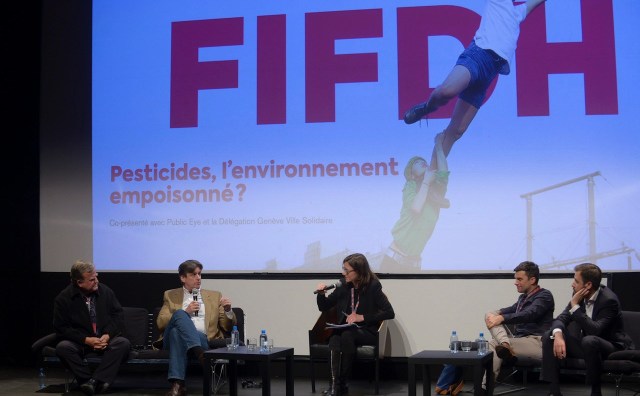
Earlier this month, I was honored to be invited and to speak at this event following the screening of “Poisoning Paradise” – Executive Produced by Pierce Brosnan and Produced and Directed by Keely Shane Brosnan and Teresa Tico.

The program described the film as follows: “In their meticulously researched documentary Poisoning Paradise, film-makers recount the transformation of Hawaii from agricultural land to testing grounds for the powerful agrochemical industry and the response of many communities who are trying to reclaim their land, their health and their right to live in a safe environment.”

The panel consisted of myself, Laurent Gaberell, an expert in agriculture and biodiversity affiliated with the Swiss organization Public Eye, Baskut Tuncak, the Special Rapporteur on the human rights implications of environmentally sound management and disposal of hazardous products and wastes, and Hank Campbell of the American Council on Science and Health. The moderator was Maren Peters, a journalist and editor of the economic section for Swiss Public Radio.

While most of us working on the issue surrounding the health and environmental impacts of the agrochemical industry here in Hawaii are keenly aware of the local impacts to our communities, streams and coastal waters – it is easy to forget that this is an international issue impacting communities on every continent.

That was the takeaway. The issue of large corporations dominating the economic and governing infrastructure of communities and countries around the globe, and the fact that people in each and every one of these communities and countries are pushing back and winning in small ways and in big, was the underlying reality we all shared.

The human rights principle we were there to discuss:

“Man has the fundamental right to freedom, equality and adequate conditions of life, in an environment of a quality that permits a life of dignity and well-being, and he bears a solemn responsibility to protect and improve the environment for present and future generations.” Stockholm Declaration on the Human Environment (1972), Principle 1.

The audience of several hundred and the panelists were all clearly struck by the superimposition of a “paradise island in the pacific” with the experimental fields of corn, large quantities of restricted use pesticides being used, the obvious health and environmental impacts, the refusal of the industry to even disclose the pesticides they were using, and the money and political influence the international agrochemical companies wield in our community.

It is important to note that in Switzerland, GMO crops and foods are banned. Labeling of food is not an issue because the products are simply banned. There are no experimental fields of anything growing in Switzerland. Also banned in Switzerland are the pesticides atrazine and paraquat, which are both used in copious amounts near neighborhoods, schools, parks and other public areas in Hawaii. Atrazine is responsible for polluting international waterways in Europe, is one of the largest polluters of groundwater in the western world, and shows up in Hawaii waters on a regular basis. Paraquat has been banned in 38 different countries but continues to be used along with atrazine, extensively in Hawaii.

While in Switzerland I also met with members of the Swiss Parliament, the United Nations, and various groups representing academia, activism, and the international media.  Without exception, the fact that Syngenta, a Swiss based company is using chemicals in large quantities on Kauai (albeit now via Hartung Brothers) that are banned in their home country, elicited reactions of incredulousness, embarrassment and compunction.

Right or wrong in their thinking, what seems so outrageous to people everywhere who hear our story is that it is happening here in the jewel of the pacific, ostensibly in America, the richest and most powerful country in the world. And it is not lost upon them that the people that suffer most from the abuses of these companies, are the indigenous people who once governed the lands upon which these poisons are now being sprayed.

group shot of geneva panel 7028©MiguelBueno

Posted in Uncategorized | 2 Comments