Tulsi, Kahele…and the candidate stampede to follow

Congresswoman Tulsi Gabbard’s announcement that she would not be running for re-election, caught Hawaii’s political world by surprise.

Initially, conventional wisdom would say that Big Island State Senator Kai Kahele is the heir apparent.

But those more skilled in the sometimes dark arts of political maneuvering would say, “Perhaps, but then again perhaps not”.

To be clear, I like Senator Kahele. Though I do not know him well, his actions and his words during the past year indicate to me that at the end of the day he will choose people and the planet, over corporate greed.

How hard he will push back against the power and influence that maintain and perpetuate the status quo in Washington, D.C., I do not know. Whether he will fall into the trap of going along to get along, also remains to be seen. Of course, these same two questions apply to every candidate, for every office – federal, state, and county.

But so far, I like what I see, and think he is a good candidate who if elected, would serve Hawaii well.

However, the political reality is that at the moment, there are no other candidates and thus no one to measure him against.

Very soon other candidates will emerge, of this, I am absolutely sure.

The allure of a primary with no incumbent is simply too strong to resist.

Yes, Senator Kahele has a head start and yes, his campaign has apparently raised over $500,000, which indeed is a respectable sum.

However, there are at least a dozen others either now serving, or sitting on the bench who have similar or even greater name recognition, credible resumes, and the ability to raise the funds necessary to run a competitive race.

These 12 and undoubtedly, even more, are at this very moment discussing with friends, family, and potential donors – whether to jump, or not.

Each potential candidate is asking the same questions. How strong is my name recognition compared to Senator Kahele? Is my base of friends and supporters within the Second Congressional District (CD2), which is dominated by the neighbor islands, strong and diverse enough? How many of them might already be committed to Senator Kahele? Can I raise the money needed to win?

Very soon, someone who perhaps already has the money and the name recognition will jump in, and then in short order others will follow.

As more candidates enter the race, those with less fundraising capacity but perhaps strong name recognition and a dedicated base of supporters will likewise be emboldened to enter.

Prediction: Eventually there will be 6 to 9 credible Democrats splitting up the votes and battling it out for this much-coveted seat in the US Congress.

Further fueling the number of candidates jumping into the fray will be State Senators midway through their 4-year terms (as is Senator Kahele), with no requirement to resign their State Senate seat.

Add to the potential mix of credible candidates several City Council members who are terming out of their existing positions, and could also be interested.

Because Hawaii is essentially a one-party state, winning the primary on August 8, 2020, is everything. In the age of Trump, there is no way that voters in this particular district will elect a Republican to Congress – remember the CD2 is Patsy Minks district.

A crowded primary with no incumbent means it’s winner take all, and garnering a majority of the vote is not needed to win.

That’s correct – the winner need not have a majority to win. A plurality of any amount is sufficient to win the primary and move to the general where a symbolic, sacrificial and unelectable Republican will simply be holding space for their Party.

In the 2006 CD2 race, the dynamics were similar. In that race, 10 Democrats threw their hats in the ring. On primary election day, now US Senator Mazie Hirono was declared the winner after receiving only 20.7% of the vote.

I repeat, Mazie Hirono won with only 20.7% of the vote. For me, the memory is of course vivid.

Former Senate President (and eventually Congresswoman) Colleen Hanabusa came in second with 20%. Yours truly, then Senator Gary Hooser came in 5th at 9.7% just ahead of then State Representative Brian Schatz (now US Senator) at 7%. See the complete list and exact vote counts in the attached graphic.

In theory, the more candidates that enter the race, the smaller the slice of the vote pie potentially needed to win. Thus, candidates with a “strong base” (ideological, geographic, demographic or issue centered) but who might struggle to appeal to a broader majority, are especially drawn to enter the contest.

Hence the allure of a crowded primary with no incumbent.

Everyone who enters the race will believe their base is sufficient to win the day. Excessive optimism – it’s the nature of the beast carried within every candidate.

First published in The Garden Island Newspaper on October 30, 2019

Posted in Uncategorized | 15 Comments

Legislators get pay raises while minimum wage workers get nothing

The Aloha United Way commissioned ALICE REPORT: A STUDY OF FINANCIAL HARDSHIP IN HAWAI‘I determined than in 2017, 11% of Hawaii residents were living in poverty while another 37% exist on its very edge, only one paycheck away from financial disaster.

Every Hawai’i legislator serving in the Hawaii State Senate, and in the House of Representatives will receive a pay raise, starting in January of 2021. Likewise every member of the County Council, Director’s of County and State agencies, the Mayor, the Governor, the Lieutenant Governor, and State Judges – ALL THOSE IN POSITIONS OF POWER IN GOVERNMENT WILL RECEIVE A PAY INCREASE.

While legislators and top government executives are lined up for generous pay increases, OUR STATE LEGISLATURE MADE A CONSCIOUS DECISION ON APRIL 26 OF 2019 TO GIVE MINIMUM WAGE WORKERS NOTHING – ZIP, NADA, ZERO.

The State Department of Business Economic Development and Tourism (DBEDT), has determined that $17.50 per hour (approximately) is a “subsistence” wage for a single person. This means that a person needs to make $17.50 an hour to simply survive.

The minimum wage in Hawaii sits now at $10.10 per hour.

During the 2019 legislative session several bills were introduced intending to both increase the minimum wage, and to help small business.

Multiple hearings were held in the House and Senate. 1,000’s of people from all walks of life testified in support, many took off from work to do so in person and others paid to fly in from the neighbor islands. Countless hours were spent by many, waiting patiently for the committee to eventually call their name to offer testimony.

Though the data collected in the years following past increases in Hawaii’s minimum wage shows unequivocally that there has been no subsequent increase in unemployment, no increases in bankruptcies and no related increases in inflation- the Hawaii Chamber of Commerce insisted the sky would fall if the minimum wage was increased further.

It was the State House of Representatives who ultimately pulled the plug during the final days of conference committee. The excuse given, was that a provision intended to help business was, to paraphrase, “possibly flawed and not ready” and “there was not enough time remaining in the session to fix it”.

Rather than pass a stand-alone, strong but reasonable, minimum wage measure that phased in a $15 per hour wage over several years – the joint House/Senate Conference Committee swallowed the poison pill provided to them by the business community, and killed the entire measure.

The consequences are real.

Legislators will get their raises, but minimum wage workers will get nothing.

Wait until next year, submit another bill and we will try again during the 2020 session, is the familiar but somewhat disingenuous refrain.

The reality is that legislators have had many months now since the close of the session to work out the kinks, to meet with stakeholders, staff and the administration. They could and should have, (and hopefully actually have) come to an agreement by now on a clean bill, that can be passed promptly upon the opening of the 2020 legislative session.

There is no rule, law or any valid reason that the community should have to “submit another bill”, and go through the entire process again.

Though the past practice of the legislature may be to force the community to start again at the beginning and go through the entire process again, it is totally unnecessary to do so – except to perhaps accommodate the desire of the Senate President and the House Speaker, should they decide to require it.

The legislature operates on a two year cycle and every bill submitted in 2019, unless outright killed in a vote – is still alive.

There is no legal requirement to “start over from the beginning”. The legislature can merely pick up bills exactly where they were left off at the end of the 2019 legislative session.

HB1191,HD1,SD2 increasing Hawaii’s minimum wage to $15 remains in conference committee.

Upon the opening of the 2020 legislative session, with the concurrence of the Senate President and the House Speaker, the committee can simply be reconvened, a hearing scheduled and the measure amended and passed.

I am hopeful that when the legislature opens on January 15, that this in fact will be what occurs. There is no reason to force thousands of citizens to jump through the hoops of multiple hearings in the House and Senate, to take off of work, arrange child care and possibly incur the cost of traveling inter island- only to end up in exactly the same place.

However, as someone who has a bit of experience in these matters, I am keenly aware that hopefulness is no substitute for old fashioned political advocacy.

So please, if increasing the minimum wage is important to you, contact Senate President Ronald Kouchi senkouchi@capitol.hawaii.gov and Speaker of the House Representative Scott Saiki repsaiki@Capitol.hawaii.gov today.

Ask them please, respectfully and politely, to reconvene the conference committee for HB1191,HD1,SD2 and pass a strong minimum wage increase of at least $15 per hour as the first order of business of the 2020 legislative session.

While not a living wage, nor even a subsistence wage – $15 per hour represents a strong step in the right direction. If tied to annual cost of living adjustments (COLA) as well as future incremental modest increases, eventually a true living wage could be achieved.

Imagine that. A future where every Hawaii resident who works a 40 hour week can afford a dry, safe place to live, three meals a day and basic health care.

Posted in Uncategorized | 2 Comments

On Gary’s “availability”.

People are often asking as to “my availability”.

Bottom line: If I can help, do not hesitate to call.

I am available to meet informally with any individual, anywhere in the state of Hawaii, who is considering running for public office AND who has roots in their community, AND who shares my core values of putting people and the planet first. 

It goes without saying also, that I am willing to meet with any County, State or Federal  – legislator, administrator or staff person – if they believe I can add value to the work they are doing.

I am also available to meet and consult as a volunteer, with any organization that would like to discuss legislative strategy pertaining to environmental, economic or social justice issues.  If your organization needs ongoing support with government affairs, legislative and political strategy or other “on the ground political or legislative advice”, please also do not hesitate to call.  

In conjunction with the Hawaii Alliance for Progressive Action (HAPA) and in collaboration with other community partners – I/we are available to conduct “advocacy training” to groups of 20 or more.

I enjoy tremendously, speaking to students and community groups (large or small) on the importance of civic engagement via an “insiders view” on the legislative process. 

While my home is on Kauai, I travel weekly to Oahu and frequently to Maui and Hawaii County as well.

Bottom line: If the mission and goals of your organization or effort are in alignment with mine –  I am there to help and support, so do not hesitate to call or email.

Gary Hooser

808-652-4279  GaryLHooser@gmail.com

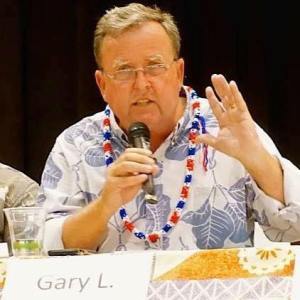
gary at mic with lei

Posted in Uncategorized | Comments Off on On Gary’s “availability”.

With the stroke of a pen, the power of a majority

The power of a single legislator whether on the council, at the state legislature, or in the U.S. Congress, is limited to that of being one voice and one vote.  They may introduce bills (proposed laws), they may cast a vote on those bills and they may use their voices to inform and educate.  As an individual legislator, they may also convene meetings and “shine a light” into the often dark recesses of government operations and the decision making processes.

But the true power of a single legislator comes with their ability to form alliances with others.  We are taught in school that majority rules – and this is the single most important truism of a democratic government.

On County Councils, we don’t need 7 or 9 (depending on the County) council members to agree, we actually only need 4 or possibly 5. In the State Senate, the magic number is 13 out of 25 and in the State House, it’s 26 out of 51. In the U.S. Senate, the critical number is 51 of the 100 and in the U.S. House, it is 218 of 435.

Alone, a legislator can be a strong voice and sometimes a strong vote – but when part of a majority they can move mountains (assuming, of course, that majority wants to move mountains).

With the stroke of a pen a majority in the Hawaii State Legislature could:

  • Solve the problem of Hawaii’s dependence on importing 90% or more of our food, by requiring all public schools, prisons, and hospitals to only purchase locally grown food.  Think about what a boon this would be to the local farming and ranching industry.  Instantly farming for many would “make sense” and more importantly it would make money – and of course that money and that food would stay in our local economy.
  • Improve the lives of all low income working people in Hawaii, by gradually increasing the minimum wage to a living wage, mandating a paid family leave policy and aggressively funding a local “earned income tax credit”.
  • Expand and diversify our economy by providing aggressive support and tax credits to small locally owned businesses.  Increase taxes on big box stores, banks, insurance companies, luxury resorts and other large businesses with off-shore ownership.  These businesses export profits,  often avoid the payment of local state taxes and have a bad history of paying substandard wages to local workers.  They need to pay more and those funds used to support genuine small, local family-owned businesses.
  • Require all rental car companies to utilize only electric or ultra high mileage vehicles.  This would decrease Hawaii’s carbon foot-print and dramatically increase the market and support for electric vehicles – statewide. This would also increase the demand for home roof-top photovoltaic (PV) and cause the proliferation of charging stations – making electric vehicles even more attractive and affordable.
  • Increase visitor/air-travel fees/taxes to offset the greenhouse gasses generated by the travel industry, and utilize those funds to create “green jobs” focused on watershed restoration and natural resource protection.

And of course, a majority could also completely restructure the management of Maunakea, increase teacher pay, reform our criminal justice system, legalize cannabis, create affordable housing by increasing density in our urban centers while upgrading infrastructure AND reform lobbying and campaign spending regulations.

The naysayers will say: “Where are you going to get the money to do all of this?”

There is of course money, though it will have to be pried from the cold, very live hands of the uber-rich, foreign pension funds and the multinational corporations that are currently making billions off the exploitation of our natural resources, our indigenous host culture, and local families. There is no shortage of people, businesses, products, and practices – that do not pay their fair share of the societal and environmental costs they put upon the planet.

Too much too soon? The answer is creating public policy that both phases in the change incrementally, but also ultimately achieves the goal. A majority could pass laws today that mandate 100% local foods served in schools, 100% of rental cars being electric and 100% of Hawaii’s workers earning a living wage but is achieved over the next decade – 10% increase per year over 10 years. To be clear, we need a mandate – not simply goals and aspirations.

This is the power of the majority, and this, of course, should be our goal as citizens – to elect and support a majority of legislators at the county, state and federal level who put people and the planet first, who recognize the urgency of the moment AND who are willing to act accordingly.  

Gary Hooser – http://www.garyhooser.com

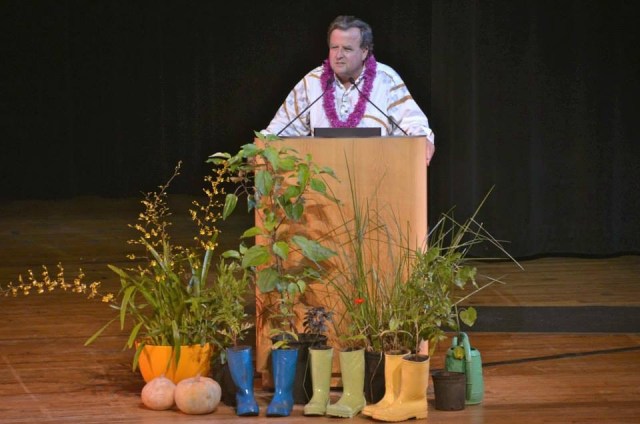
nice photo of hooser on stage with boots in forfround


Posted in Uncategorized | 4 Comments

4 powers every legislator has, and one they definitely don’t

What exactly does my legislator do?  What power do they have and what exactly can they do, or not do?

The quick and dirty answer is:

  1. They have the power to pass laws (but not really).
  2. They have the power to keep laws from passing (if they are brave, have their facts together and know how to talk- or they are a committee chair)
  3. They have the power to convene (but often they do not realize they even have this power or the power of this power)
  4. They have the power to “shine a light” (if they are brave enough, smart enough and articulate enough to actually do it)
  5. They do not have the power to change a light bulb or pave a road.

Passing laws:

Most people equate the job of being a legislator to that of being a  “lawmaker”.

However, in terms of actually passing into law a new idea or change of public policy, an individual legislator is limited to the power of “bill introduction”. Bills are proposed laws that in theory are put into the legislative pipeline for public review. The ability to introduce a bill is clearly a significant power in what is supposed to be a marketplace of ideas, but it’s a long, long way from passing something into law.

The power to actually pass a new law is held by the majority.  And of course the mayor, governor or president must also agree (or be overridden by a supermajority).

Individual legislators, of course, are needed to “hold a majority together”.  Therefore that proverbial “swing vote” (that one vote needed to gain a majority position and ensure the passage of a measure) can be critically important. Individual legislators positioned as the “swing vote”, can thus possess significant individual political power – possibly even shaping the final outcome of the proposal.

Power to kill bills:

It is actually easier (IMHO) for an individual legislator to influence the killing of bills, than passing one into law. 

IF a legislator is willing and able to publicly articulate why a particular piece of legislation is “bad”, and IF they can substantiate their position with credible facts and research- a single legislator can sometimes sway the majority opinion such that the proposed bill either is amended to “fix” its deficiencies or is killed. Note “bad” is in the eye of the beholder.

The most notorious example of a single state legislator’s ability to kill a bill is tied to the power of a committee chair. Through the power granted to them by the majority, individual committee chairs can and do kill bills in a myriad of ways, the most common of which is simply by refusing to schedule a hearing. 

Power to convene:

The individual legislator has the power to “convene” – to simply call a meeting (official, unofficial, public or private). 

The power to convene is an important but often underutilized power that many new legislators do not even know they possess. The truth is that if a legislator from the state, county or federal government requests a meeting with any agency or organization (public, private, profit or nonprofit)- they are normally granted the opportunity to meet. This power can be used simply to educate the participants and or to bring various interests, groups, and individuals together in order to address common issues. 

The power to shine a light:

Last and most certainly not least – individual legislators have the power to “shine a light”- the power of the soapbox. Legislators have their title and their responsibility as voices elected by the people in their district. The media recognizes legislators as a legitimate and credible (until a legislator proves them wrong) voice of the community and will normally listen to and sometimes place their concerns front and center. Whether used to expose wrong-doing or to promote positive and meaningful public policy proposals, IF they are prepared and willing to use it, the power to “shine a light” is often the most important power possessed by the individual legislator.

When asked, the general public will often say that the main job of a legislator is to balance the budget, pave the roads, clean our parks and in general keep our government doing what the government is supposed to do. 

While approving a balanced budget (depending on who is doing the math) is a responsibility of every legislative body, legislators do not enforce laws and they do not manage government employees (other than their own). Generally speaking, the enforcement of laws is strictly the domain of the administrative branch (president, governor, and mayor). 

According to the County Charter, a member of the Kaua’i County Council may not direct any county employee (outside the council) to do anything.  All directions for administrative action must go through the Mayor’s office.  The Mayor is the boss of county employees, not the Council (except of course for Council staff).  Ditto, for the most part – for state and federal legislators.

Individual legislators cannot order a road to be paved, a park cleaned, or even a light bulb to be changed in a government building – those tasks can only be ordered by the administrative branch.

Even when a “majority” of the legislative body (council, congress or a state legislature) agree – the most they can do (outside of seeking judicial action) is request or ask the administration to do something. As a last resort, a majority in the legislative body could use their “budget authority” and/or “audit power” as leverage to pressure the administration to act.

So please remember, the next time you demand that a legislator pave the road, or clean the park or crackdown on crime – that is really not their job.  To be clear, they can be a squeaky wheel on your behalf (and certainly sometimes that is appropriate) but they cannot direct government employees other than their own staff.

At the end of the day, legislators are responsible for making sure the people actually doing the job (the administration) have the resources they need (via passing the budget), for passing new and improving existing public policy initiatives, and for providing public oversight and accountability.

Gary Hooser –

sign up for the Hooser newsletter: http://garyhooser.com/#four

Posted in Uncategorized | Comments Off on 4 powers every legislator has, and one they definitely don’t

When the electoral paradigm creates a political epiphany

Traditional campaign logic says that candidates should spend their limited resources talking to people who vote, rather than people who for whatever reason, do not.

The so-called “super voter”, is someone who never misses an election and is typically described as a local resident, born and raised in Hawaii, and over 65 years old. The logic goes on to say that the worst person for a candidate to spend their limited time, energy and money on – is the unregistered voter who is often younger, lower-income and disaffected. Further rationale for not pursuing the unregistered voter is that even if a candidate is successful in registering the person, there is no guarantee they will vote and most do not.

While I stand by this basic logic and encourage candidates to focus on those “super-voters”, recent changes to Hawaii voting laws add a new and important twist to the importance of new-voter registration.

Beginning in 2020, all elections will be “vote-by-mail”. This means that every registered voter will receive a ballot in the mail on or about July 21st, and then have until August 8th (Primary Election Day), to review and submit their vote. The ballot must be received by the office of elections prior to or on August 8th.

There will continue to be a limited number of “in-person” voting locations open on election day August 8, but the vast majority of votes are expected to be cast by mail.

Translated: Registered voters (both newly registered and otherwise) do not have to remember to show up at the polls on election day. They will have effectively 15 days (plus or minus depending on mail delivery time) to “remember” to vote. PLUS – candidates will have that same amount of time to “remind” the voters (via door-to-door canvassing and direct mail etc) to vote.

Further Translation: The likelihood of a strong increase in voter turn-out among the newly registered first-time voters (and all voters really), is significant.

Hawaii’s transition to a “vote-by-mail” system presents a new paradigm, and a new opportunity for those who want to support and elect new voices, especially at the state and county levels.

This new way of voting in Hawaii represents an opportunity for community and civic groups to support those candidates who are pushing against the status quo, and who need that extra help – by embarking on aggressive voter registration drives, especially targeting the young and under-represented.

And registering to vote is so incredibly easy to do online at https://olvr.hawaii.gov

In election parlance, small numbers matter and even small percentage increases in targeted demographics (think young people and native Hawaiian) can make a HUGE difference.

After-all, the “super-voter”, or the older establishment voter demographic, is already tapped out. They are already voting and the potential % increase for them, the number of votes they are leaving on the table now, is negligible. Consequently, if the new voter does turn-out (and the research says that this is very likely), then the 2020 election could, in fact, be a watershed event.

The research is clear and consistent.

Studies by Pantheon Analytics examined turnout in Colorado in 2014 and in Utah in 2016…” using each voter’s modeled vote propensity score, we found that low-propensity voters in Colorado dramatically over-performed their expected turnout…The Colorado voters who were predicted to turn out at a rate of 10%, for instance, turned out at a rate of 31% instead…The analysis in this report provides strong evidence that moving to a vote-by-mail system increased turnout in Utah in 2016…When political campaigns and organizations run get-out-the-vote experiments, they are thrilled to see an effect size of even one additional point of turnout. An additional five points of voter turnout — or three points, or seven, or twelve and a half — is an enormous victory for civic participation.” Pantheon Analytics • info@pantheon-analytics.com

In 2017, The Nation reported on “Automatic Voter Registration (AVR)” saying, “Of the individuals who were registered for the first time through Oregon’s new program, a significant portion—67,902, or 36 percent—voted in 2016.”

The responsibility of increasing voter registration falls to all of us. Community groups and nonprofits across Hawaii need to step up, join forces and organize aggressive new voter registration drives targeting those voters who are greatly underrepresented. So long as the effort is nonpartisan and not candidate-specific (as required by law), this is an area where nonprofits can offer significant value.

And yes, there is a method to this madness.
1) Assuming that 36% of newly registered voters will actually vote.
2) Assuming also that the voter registration drive targets the “under-represented” – primarily young and those representing demographics who care deeply about environmental, economic and social justice.
3) Then it is most likely also safe to assume that those candidates who believe strongly about these same issues will also benefit from the 36% of the votes cast by the newly registered.

Voila! A bonafide political revolution in Hawaii.

All it takes is for people to take ownership of their government.

It’s called #reclaimingdemocracy

Posted in Uncategorized | 3 Comments

Be there Sep. 20th – Climate change is real

Please join me, and a whole lot of other people from across the planet – Friday, September 20th (see details at bottom) – Help send a message to policymakers and government leaders everywhere and tell them:

CLIMATE CHANGE IS REAL, IT IS AN EXISTENTIAL THREAT TO OUR PLANET, AND STRONG BOLD ACTION IS NEEDED NOW!

Look it up please (I did) “existential” threat – a threat to our very existence.

Yes, it is serious. And yes, far too many in positions of power and authority have chosen to either look the other way or address the politics of the issue with only lofty vacuous goals, devoid of the bold public policy changes needed to protect the future of our planet.

During the coming week, especially on September 20th – political and government leaders across the U.S. will be offering speeches, press releases, and proclamations galore.

At every level, County, State, and Federal – All will pledge to “take the issue seriously” and to “do something about climate change”. More than likely many will throw in at least a half-promise to “get our county and state off of fossil fuel”.

Each will also praise those who show up to carry signs and exercise their right to free speech. They will say the right words, acknowledge the importance of the issue, and promise to do whatever they can.

It’s up to all of us to hold them to their words. It’s up to all of us to provide the help, and support the political will necessary to make the tough policy changes that must be implemented.

While showing up on Friday, September 20th is critically important, it is only the start. If you believe as I do that climate change is truly an existential threat to our planet – then you must commit to keeping your voice loud and your presence known, front and center.

Those political leaders who want to do the right thing, need our support.

The hard choices needed to slow the rate of planetary warming have political consequences, both positive and negative. As individuals, and as a group we must support those political leaders who support us. Those few who are willing to risk their careers proposing the much needed bold but sometimes politically volatile policy changes, need to know that we have their backs.

The fossil fuel industry and its allies are formidable foes. And make no mistake about it, they are the enemy in our fight to save the planet.

There are lots of strategies to deal with the climate crisis, however, unless the drastic reduction in the use of fossil fuels is a central component – we are fooling ourselves.

We cannot afford to just nibble around the edges, satisfying to some extent our personal need to “do something” while offering our elected leaders “political cover”.

To some, Hawaii’s impact on global warming and climate change may seem insignificant. However, as an island community especially vulnerable to the negative impacts of sea-level rise and hurricanes, Hawaii can and should be a global leader in this battle.

As a community and as individuals there are lots of things we can do. And, with a strong commitment from our government, we can do far more.

We can plant trees and we should. But we should not plant them only to burn them and call the process renewable.

We can voluntarily paint our roofs white to reflect the sun and cool our structures and we should (and I have). But this does not replace requiring via the building code, that all new roofs have a solar reflective coating and thus helping to cool the planet rather than just radiate the heat.

We can drive smaller cars, preferably electric. But without significant additional tax incentives and disincentives, too many of our neighbors will continue to drive Hummers, monster trucks and giant SUVs – putting the small car and its occupants at a disadvantage when there is a head to head competition.

Our State government with the stroke of a pen could phase in a mandate that requires all car rental companies to only rent out electric or other highly efficient automobiles. Tax incentives and disincentives could be used to facilitate the changeover. Imagine the many positive impacts if every rental car on the road in the state of Hawaii was a small electric car.

Our County and State governments could require that 100% of their fleet be electric or otherwise highly efficient. Too often, our Government falls back on “we are trying” or “we aspire to…”. The time for trying and aspiration is long past – it’s time for the County Council and State Legislature to mandate the change.

Taxing the use of carbon or a “carbon tax” is often discussed here in Hawaii but never implemented. The underlying principle that those who contribute the most to global warming and climate change (as measured in their carbon footprint) should also pay the most – is a valid one.

Another valid principle, however, is that politically speaking, raising taxes is probably the most difficult and riskiest vote an elected official ever makes. The excuse most often used to fight against a carbon tax is that it will hurt poor people (which it seems is most of us).

The truth is that a person’s carbon footprint expands with wealth and income. Those with money will travel by air more, have a larger house (swimming pools and air-conditioning, etc) and in general consume far more energy than people of low to moderate-income. Yes, it is also true that low-income households will often drive older, larger and less fuel-efficient vehicles – but public policy initiatives can adjust for this.

The larger truth is that big business, big oil and big cars too often have the political muscle to stop changes in public policy when they fear an impact on their profit margins.

Of course, it is all connected. Whether your focus is on environmental, economic or social justice – left unchecked the increased warming of our oceans and the related climate crisis will and in fact already are exacerbating those many problems and challenges that already weigh heavily on our communities.

Which is why we need you to show up. Climate change is real. It impacts all aspects of our lives and we must send a strong and sustained message to government leaders everywhere. The time for action is now.

What we lack in money for lobbyists and campaign contributions, we can make up in numbers, at the election polls, at the public hearings – and most importantly now – on September 20th.

In spite of the odds. In spite of the enormous threat presented by global warming and the related impacts of climate change – I believe there is hope, and that we can in fact win.

Please join me and many others this coming Friday, September 20 to stand with the youth of today, across our planet – to push back against the powers that be and to fight for a stable, clean, bright future.

Kauaʻi
11:30-12:30pm Highway cleanup at KCC one-stop-center
1-3pm Sign-waving and speakers at KCC
3pm Bike to the Mayor’s office
https://www.facebook.com/events/694144941063574/

Hawaiʻi Island
3-6pm Sign waving at Kamehameha Statue, Hilo
https://www.facebook.com/events/2126259534341794

Maui
9am-1pm #Fridaysforfuture sign-waving at Maui County Building
4pm Rally at UH Maui College Great Lawn
4:30pm Sign-waving on Kaʻahumanu Ave followed by music, youth speeches, tabling and more
https://www.facebook.com/events/507170573189819

Molokaʻi
4-6pm Sign-waving at Molokaʻi Public Library

Oʻahu
4-6pm March from Governor’s Mansion to State Capitol to Honolulu Hale
https://www.facebook.com/events/729514164168461

Posted in Uncategorized | Comments Off on Be there Sep. 20th – Climate change is real

The Mauna is sacred. Say the words.

The righteous indignation being spouted by TMT supporters, about following “the rule of law”, is ridiculous. Gag me with a fork.

The state and in fact all government entities exercise discretion on which laws they enforce, every single day of the week.

Today, at this very moment the Agribusiness Development Corporation (ADC), a state agency, is dumping literally millions of gallons of water polluted with pesticides and heavy metals into near-shore waters (ie – at the beach), on the west side of Kauai. The court has ruled that it is illegal to do so without an NPDS permit. The ADC is breaking federal and state law, yet our government looks the other way and lets it continue.

Where is the righteous indignation here? Oh, forgot to mention – If the state makes their own agency, the ADC, follow the law then corporations doing the polluting will be shut down.

The protection of profits takes precedence over the protection of people and the planet – and to hell with the rule of law in this case.

But of course on Maunakea it is different (#not).

The pro-TMT forces whine about the government not enforcing the law, demanding that the troops be called in to protect the billions of dollars that will supposedly flow to the University, and then theoretically trickle down to the rest of us.

They complain about an un-permitted structure and demand its removal. But of course, no one is demanding that all un-permitted structures be removed from around the state, only this one particular structure. What a joke. There are zillions of un-permitted structures located in communities on all islands and government chooses to look the other way, except of course on Maunakea.

Today, we read the protectors on the Mauna are possibly trampling upon and damaging endangered plants, and so the state must take action!

DLNR Chairwoman Suzanne Case is quoted in the Honolulu Star-Advertiser as saying. “Intentional or not, this damage is happening and it’s very concerning…There’s really just no way to have hundreds of people every day, often thousands, in sensitive natural areas…without this kind of harm resulting.” Please. Give me a break. On my island and on every island the state allows and in fact encourages not thousands, but millions of tourists to trample our reefs, mountain trails, and sensitive areas DAILY. The state’s selective enforcement tells us that it is not here to protect our reefs, mountains, or wildlife habitat. The state’s highest priority is to protect the investments of large landowners and foreign corporations.

Our state government allows and in fact grants permission to for-profit corporations via massive water diversions to literally kill countless streams and their related eco-systems. Yet they shout out with righteous indignation and threaten enforcement over the possibility of Native Hawaiians accidentally or inadvertently stepping on endangered plants while seeking to protect the Mauna. Give me a break.

If our state government is sincere about resolving the Maunakea issue, then they need to stop the BS righteous indignation act. Sending in the troops (complete with black masks) to shred our flag and tear down one lonely un-permitted structure, and now rattling the saber about Hawaiians trampling on vines – is not the way to build goodwill and better friendships (mahalo to Rotary).

Dialogue begins with respect.

And respect starts with acknowledging that Maunakea is indeed sacred, deserving of the attention and protections being demanded by those who now occupy the ground at its base.

All who wish to come to the table must first agree to the sacredness of the Mauna. No good-faith conversations, let alone “negotiations” – can possibly be conducted until everyone at the table acknowledges that yes Maunakea is indeed a sacred place.

I encourage all who question the sacredness of the Mauna to read and study the Kumulipo which is the ancient Hawaiian “creation chant”. You can find more information and translated text HERE http://www.ulukau.org/elib/cgi-bin/library?e=d-0beckwit2-000Sec–11haw-50-20-frameset-book–1-010escapewin&a=d&d=D0&toc=0

Please also read this excellent article “What Makes A Volcano Sacred?” in the Atlantic Monthly:

“In the Kumulipo, the ancient chant that tells the story of how the Hawaiian Islands and the Hawaiian people came to be, the volcano is considered kino lau, the physical form of the gods. Mauna Kea is the son of Wākea, the sky father, and of Papahānaumoku, the Earth mother.” https://www.theatlantic.com/technology/archive/2015/10/what-makes-a-volcano-sacred/413203/

It is of course past time for our government leaders, to begin leading.

The situation at Maunakea will not be resolved by force, nor by the conventional western notion of negotiation.

The use of force will only intensify and magnify the opposition, with negative repercussions that will last far into the future. Western-style negotiation of “I will give you this if you give me that.” is also a non-starter, and will lead nowhere.

The leaders on the Mauna cannot be bought with the promise of jobs, a learning center/museum, scholarships for the keiki, nor any other bright and shiny objects. Theirs is a position of principle. Theirs is a position of a righteous and just cause – the sacredness of the Mauna.

To move forward, this is the context upon which all discussions must be grounded. The TMT developers must acknowledge this and our government must acknowledge this, AND until this happens there will be no respect and consequently no progress toward any resolution.

The Mauna is sacred. Say the words – and then hopefully talks can begin.

******************************************************************************

Footnote and Disclosure: I am certainly no scholar of Hawaiian history and culture. However, many other scholars in many different publications – have referred to Mauna Kea as being sacred. Many point to the Kumulipo to justify the sacredness statement, as I did in the piece written above. However, others have informed me that the kumulipo does not expressly refer to Mauna Kea.

The Kumulipo does contain a specific reference to a body of water that is on Mauna Kea, by the name of “Waiau” – And from hours of reading/research…it seems clear that Waiau is considered also sacred in a historical context. Because Waiau is located on Mauna Kea and referenced in the Kumulipo, and because Mauna Kea is included in many other historical recounts, references, and chants, may be some of the reasons why so many “sources” scholarly, mainstream credible press and otherwise, say that Mauna Kea is referred to in the kumulipo.

In any case, I have no doubt as to the sacred nature of the Mauna – this conclusion is further supported by the following.

Mauna a kea – Examining a Chant

http://www.ulukau.org/elib/cgi-bin/library?e=d-0mauna-000Sec–11haw-50-20-frameset-book–1-010escapewin&a=d&d=D0&toc=0

The intercourse between Wākea and Papa gave birth to the islands of Hawai’i—the solid foundation for life. The Big Island is their haipo or eldest child. Mauna Kea is the child’s piko, which is translated to umbilical cord, navel, or belly button (Puhipau 2006). The reference to Mauna Kea being the first-born is seen in mele hānau (birth chants) like this one for Kauikeaouli (Kamehameha III):

The below thesis contains much information, and also refers to Mauna Kea being part of the Kumulipo…and also has this information as to other chants referencing the Mauna

Click to access f97b311e2f83324955a1c9fd674e62002341.pdf

O hānau ka mauna a Kea, (Born of Kea was the mountain,)
‘Ōpu‘u a‘e ka mauna a Kea. (The mountain of Kea budded forth.)
‘O Wākea ke kāne, ‘o Papa, (Wākea was the husband, Papa)
‘O Walinu‘u ka wahine, (Walinu‘u was the wife.)
Hānau Ho ‘ohoku he wahine, (Born was Ho‘ohoku, a daughter,)
Hānau Hāloa he ali‘i, (Born was Hāloa, a chief,)
Hānau ka mauna, he keiki mauna na Kea… (Born was the mountain, a mountain-son of Kea…) (Korn 1979)

I continue to read, to learn and to research…gh

Posted in Uncategorized | 43 Comments

Corporatists masquerading as Democrats, attempting to cloak themselves as Centrists

It’s not an exaggeration to say 2020 will be, and in fact, must be – a pivotal year of change.

The Amazon burns, we keep children in cages along our borders, mass shootings are commonplace, the rich keep getting richer and the poor, poorer – all while we allow a dangerous, divisive and mentally unstable individual to occupy the White House.

Locally, we have the highest rate of houseless per capita of any state in the U.S..

Nearly half of local families live on the edge, with less than one paycheck in the bank. Working two or more jobs at substandard wages, while sharing a home with family or friends is the norm for local residents.

When factoring in the high cost of living, our public school teachers are the lowest paid in the country.

Hawaii’s natural environment is degraded daily as corporate interests divert our mountain streams and agrochemical companies pollute our coastal reefs and groundwaters.

Our criminal justice system seems based on the principle of mass incarceration in private for-profit prisons with barely even lip service given to rehabilitation and re-entry.

While thankfully our local state government is not overtly unhinged, it is increasingly tone-deaf to the urgency presented by our most pressing problems. Yes, the Hawaii State Legislature deserves credit for the many positive pieces of legislation it passes each year, but they inevitably fall short when it comes to accomplishing the bold systemic changes needed to get out in front of the critical and entrenched challenges facing our community.

The start of each and every legislative session begins always with words of promise and hope, the subsequent action in support of the nice words also inevitably fade into baby steps of incremental change, or more often than not evaporate entirely into a promise of “maybe next year”, or “let’s study this issue yet again”.

While the legislature and/or the governor could convene a special session to deal with these issues, each of which on their own should rightfully be considered an emergency, that is unlikely to happen given the track record of leadership, or the lack thereof. If the need was to support a large construction project or other priority of the Chamber of Commerce and Hawaii’s business elite, the answer of course, would be yes. But for low income working people, the incarcerated, our public schools, or the environment, it is clear such a bold action is not likely.

The legislature could also attempt to resolve the Maunakea/TMT issue which is inarguably the most “here and now” challenge facing Hawaii. A handful of individual legislators have spoken out on this issue, yet the Hawaii State Legislature as a body remains silent.

With literally the stroke of a pen the legislature could grant low income working men and women in Hawaii a much-needed increase in the minimum wage, mandate that excessive stream diversions stop immediately, and require that corporations be prosecuted when their deadly chemicals pollute nearshore waters and aquifers that host our drinking water. They could also deal proactively with the challenges facing our prisons and implement funding mechanisms to ensure our public school teachers are paid what they deserve.

The legislature could also if a call to such leadership moved them – support an immediate moratorium on all new development on Maunakea until the existing obsolete telescopes are removed and issues pertaining to the long term management of the ceded lands are resolved.

But of course, we know there will be no special session. Individual legislators statewide are almost unanimous in professing support for a minimum wage increase to at least $15 per hour, but those in a position of actually making it happen – will find ways to not deliver on their professed commitment and as has happened in the past, will continue to delay the actual passage of any such legislation.

Ditto on the other issues. Either the legislature refuses to act, acts only timidly in baby steps after years of community pressure, or in the case of the corporate water theft bill of 2019 the State House of Representatives actually attempted to give away the store.

It seems clear from a close and sustained look at their words and actions, that a majority of state legislators are in fact Corporatists masquerading as Democrats, attempting to cloak themselves as Centrists.

The keyword here is “majority”. Obviously, there are many legislators now serving that do in fact believe in putting people and the planet first, but a look at outcomes shows that without question, they do not constitute a majority.

Fortunately, we can change this in 2020. Because of the threat posed by the mad King now running the U.S., and because of the new political awareness that has been created by front and center local and national issues – it is possible and perhaps even likely that people from across all Hawaii, will, in fact, show up in 2020 to demand change.

To win in 2020, both at the legislature and at the ballot box, showing up in large numbers will be essential. New candidates from across Hawaii who share the belief that people and the planet must come first, will soon be entering the political arena, and yes more are needed.

The stars are aligning for a win/win in 2020. If the legislature passes a strong progressive and environmentally friendly agenda we win, and if they don’t it actually increases the likelihood of winning for those candidates who campaign on issues pertaining to economic, environmental and social justice.

Bottom line: 2020 starts now.

Now is the time to contact legislators and let them know where you stand on the issues. Waiting means your voice risks being drowned in the clutter and confusion that comes with a new legislative session.

Now is also the time to seek out and support those candidates who support your values, and are willing to fight for them.

And finally, if you are one of those who are on the cusp of deciding whether or not to run – know that your community needs you. If you have roots in your community, if you truly believe in putting people and the planet first, AND if you are willing to work very, very hard – your community needs you now more than ever. If you are going to run, NOW is when you start.

Gary Hooser
http://www.garyhooser.com (sign up for my regular email newsletter)
Note: This blog represents my personal and individual viewpoint only, and does not represent the position or viewpoint of the Democratic Party or any organization I am affiliated with.

Posted in Uncategorized | 3 Comments

Key Questions Every Candidate Must Answer

Top questions every candidate must answer

#1) Why?  This is the most important question a candidate must answer, and it will be asked over and over again throughout the campaign.  Hint – The answer is not to fix the roads, repair the schools, nor even to stop crime or homelessness.  The answer must be far deeper than a list of policy changes or community problems and challenges.  Successful candidates must reach down deep and explain what really drives them to public service, and then and only then can or should they attempt to talk about the tangibles.  Second hint – The tangibles must be those most important to the district resident (crime, schools, traffic, housing), regardless of any personal policy priorities the candidate may have.

#2) How long have you lived here?  Unless the answer is obvious, this will be the first question even if not spoken openly.  A rule of thumb: successful candidates have typically either been born in the district, gone to school in the district, and/or lived in the district for a number of years.  Preferably, they have been involved in the district in some leadership capacity (a teacher in the schools, coach on a youth sports team, neighborhood board or community association involvement, PTA, etc).  There are, of course, exceptions, but you will almost certainly have to work much harder if you are not “from” the district.

#3) Why are you qualified to run and serve? Hint – Your answer as a candidate must open with passion and commitment, and close with competence.  A successful candidate must demonstrate both.  Competence is best demonstrated through past achievement which could be personal, academic, professional or community-based. What have you done with your life so far?  Second hint: You cannot win with simply charisma and a nice smile.  When placed on stage next to other candidates, you must be able to demonstrate a basic understanding as to how government works.  It is also helpful to know the difference between a cesspool and a septic system, etc.  You certainly don’t need to be an expert on the mechanics of public works or public administration, but you must take the time to learn the basics.

#4) Who is on your campaign team?  A successful candidate must have a team that starts with at least two or three core individuals.  #1) Treasurer – Keeps the books, files the campaign spending commission reports and makes sure the campaign’s fundraising and spending practices follow the law. #2) Campaign Manager – Essentially joined at the hip with the candidate for the duration of the campaign, accompanies the candidate to events, strategizes with the candidate, recruits other volunteers and may be asked occasionally to fall on a sword for the candidate. 3) Field Organizer – Recruits and organizes volunteers and supports door-to-door canvassing, sign-holding, telephone banking, and other events.

Notes – These positions should not be filled with a spouse or significant other. #2) Except for statewide and other “big races” (Governor, LG, Congress, Mayor), for the vast majority of local campaigns these are volunteer positions. #3) The candidate’s team should ideally be representative of the district’s demographics.

#5) How many votes do you need to win? The short answer is one vote more than the other guy.  The longer answer: Visit elections.hawaii.gov, click “Results”, then scroll down to “Primary Election 2018”, then go to your County “Summary”, then go to the race you intend to run in, add up all of the votes cast in that particular race, divide by two and add one = equals your win number.  There are different variables, the turnout is greater in “Presidential election years” so you will want to look into the past few elections, and the turnout in primary and general elections differ.  But in Hawaii, the Primary is everything. Note: On this same page you can also view “Statewide Precinct Detail” to see how your district voted “precinct by precinct.”

#6) How much money do you need? To run any credible campaign for any public office in Hawaii, and have any chance whatsoever of winning – will cost at least $30,000 to $40,000.  Yes, some candidates will do it for less, but many will spend more.  A candidate can and should find out exactly what the incumbent spent (and what they spent it on) in the most recent election by going to csc.hawaii.gov and search “Candidate Contribution and Expenditure Reports and Organizational Reports”. View the 12/18 filing to see a lump sum number spent during the 2018 campaign – look on the line that says “5.  Total Expenditures” and then all the way to the right-hand column under “election period total to date”.

#7) Where will you get the money?  It will not fall from trees and people do not come rushing to you with fistfuls of cash. Basically, you will ask for it.  If you are not willing to ask, then you will not get and you will lose.  If a candidate is “deemed credible” by friends, family, and residents in the district – it is reasonable to assume that those individuals will if asked, provide the first round of say $10,000 in funding.  10 people at $100 plus 20 others at $50 gets you to $2,000 which allows you to purchase access to a voter database so you can begin setting up your campaign and identifying your votes. Perhaps then 4 additional affluent supporters chip in $250 each, one additional “angel” donates $1,000 and you have almost enough to print your initial “walking piece”. Now you can begin walking door to door. Hint: Ask for a specific amount, for a specific purpose, by a specific date – Can you help with a $100 contribution before September 15th to go toward the printing of my initial walking piece so that I can start going door-to-door by October 1st?” Once you begin walking, you prove yourself to others who  “like your politics and values” but are not sure if you are electable and/or if you are willing to do the work needed to win. Successful candidates will start their campaigns early and run hard the entire way through until election day. When candidates do this, people in the community notice, they spread the word to others and they will often contribute more when asked. Notes: Do not spend your own money. If you cannot garner financial support from the community and the people around you, you are not going to win. However, If you do have to “front” the campaign initial funding to print your first piece or whatever, candidates should make this a “loan to the campaign” so they can eventually be repaid these funds.

#8) What is the worse thing someone is going to say about you?  Think about this and discuss it with your team.  Adjust your “message” if needed to compensate for this. If it is at all serious (prior criminal or other provocative bad choice you might have made in the past) then develop a “narrative” in response and INOCULATE your key team members and major supporters – so they are not taken by surprise when they hear it from someone else and they know the back story and your response.

#9) Assuming the candidate has done the research needed to analyze the district, determined the “win number” and assembled a team – the next step is to file an organizational report with the campaign spending commission, open a bank account and begin raising campaign “seed money” to support the printing of the initial walking piece.  Hint1: There is no need to do a fancy “campaign announcement party or event”, this can come later.  Suffice to let the world know via twitter and facebook for now – and host a larger event at a later time. Hint 2: The longer you avoid walking the district, the greater your chances of losing.

If you have roots in your community, and your politics are based on putting people and the planet first we need you – to run and to win. And if I can help, do not hesitate to call – 808-652-4279

Posted in Uncategorized | 1 Comment