Sine Die – My Take On The 2019 Session

The bill to increase minimum wage died, so there will be no increase.

HB1326 (corporate water theft) also died, so A&B does not get a $62,000,000 benefit (yet).

We should be pleased with the outcome of HB1326 as it is a huge victory on many levels.  But we should be angry, sad, and more determined than ever to reverse the inaction on minimum wage.

A subsistence wage is $17 according to Hawaii’s Department of Business and Economic Development.  Both the House and the Senate and the Governor have stated publicly they supported a $15 per hour increase, phased in over time.  But instead, the minimum wage will remain stuck at $10.10.

It is shameful really.  Though legislators and government administrators will all be getting their raises, regular low income working people will get nothing – zero. 

Our State legislature dominated by lawmakers who were elected under the flag of the Democratic Party of Hawaii (DPH), refused to pass legislation increasing the minimum wage, a top legislative priority of their own Party.

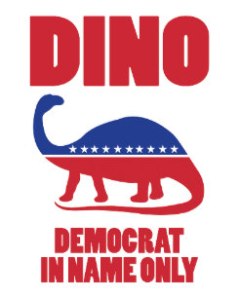
This my friends is the definition of a DINO (Democrat In Name Only).  The vast majority of legislators have all professed to support not only increasing the minimum wage to at least $15, but ultimately to a living wage. But when the crunch comes, the answer is “Shoots, we ran out of time. ” Or, “I’m not sure what happened, we couldn’t get Finance Committee clearance.”  

I respect those who are willing to publicly defend their opposition, but that is the small minority.  The majority, don’t have the courage of their convictions and instead prefer hiding behind the skirts of leadership, who dutifully carry out the will of the majority and kill the bill.

This issue alone should be enough to fuel the coming 2020 revolution.

But it gets worse.

Not one measure of substance dealing with climate change was passed.  Not one.  The defining issue of our generation, an issue upon which the entire planet’s future is based – and there is not a peep out of our state legislature.

Dedicated funding for education – failed.

Banning of single use styrofoam food containers – failed.

Legalization of cannabis for responsible adult use – failed.

Automatic voter registration – failed.

Banning of candy flavored tobacco products – failed.

Regulating “Pay Day Lenders” – failed

The legislature did pass measures to fund the construction of a new sports stadium to the tune of $350,000,000.

They also passed a measure to allow platforms such as Airbnb and HomeAway to collect taxes from both legal and illegal transient vacation rental properties.

Or as Josh Frost in his blogRegarding Frost, Sine Die put it:

“The legislature approved a measure, SB1292, which taxes illegal vacation rentals. It doesn’t stop them or in any way regulate them. It simply taxes them. So, in a shameless effort to add $42 million to the state coffers, the legislature ignored pleas from communities infected with short-term rentals and their effect on our affordable housing crisis.”

http://regardingfrost.com/sine-die-2019/

There is some genuine good news, including that the legislature did in fact pass “All Mail-In Voting”, expanded the opportunities for HEMP farming, and made some good initial steps in the direction of criminal justice and bail reform.

But at the end of the day, the 2019 legislative session failed us on far too many levels.

We deserve so much more.  Serving at the legislature is not just bringing home pork to the district, road repaving, lifeguards, and school sidewalks.  It’s also about changing public policy for the greater good.  So when legislators brag about the money they “brought home”, make sure you ask them about what policy changes they championed, and whether or not they stood up for low income working men and women.

We need to look at our own district Representative and our District Senator, and ask the tough questions.  What did they actually do?

Did they dodge the issue of raising the minimum wage or did they speak out and make their position known and public?  Are they a DINO?  Do they sincerely believe in the core principals of economic justice?  Do they believe that climate change is real and that we have a responsibility as individuals and as a State to deal with it?

Full disclaimer: I am the elected Vice Chair of the Democratic Party of Hawaii (DPH) and a member of the Democratic National Committee (DNC).  However, my thoughts and writings reflect my personal opinion, and I do not speak here as an official representative of the Party.

For me, this is not about Party, it’s about values.  Candidates should run for office wearing a Party label that reflects their personal values.  Candidates should read the Party platform and understand that when they sign their agreement to that platform, that it is supposed to mean something.
Posted in Uncategorized | 1 Comment

Some in the Senate seem willing to trade the public trust, for a $62,000,000 corporate benefit

Some in the Senate seem willing to trade outright the integrity of our law making process and the preservation of our natural environment for a $62,000,000 benefit to a private corporation. 

We are again hearing rumblings there is an effort being discussed to bring HB1326 HD2 back to the floor, and to a full vote this Tuesday, April 30th.  

SHARE THIS LINK WITH YOUR NETWORKS!  SPREAD THE MESSAGE FAR AND WIDE!

In my 20 years of experience in government, politics and policy-making, House Bill 1326 is the most egregious example of special-interest legislation I have ever seen.

Alexander & Baldwin (A&B) stands to gain or lose $62 million, depending on the outcome of HB 1326. In essence, it is attempting to sell public trust water rights derived from stream diversions in east Maui. The intended beneficiary of this transaction is Mahi Pono — a California-based LLC, financed by a Canadian pension fund — which recently purchased the majority of A&B lands on Maui.

One fairly significant problem with this proposal is that A&B neither owns, nor has long-term control over this water.

In Hawaii, whether beneath the ground or flowing through our rivers and streams, water is a public trust resource. Businesses may use the resource, but must secure a permit that ensures sufficient water remains in the stream to preserve its natural ecosystem and that down-stream users also have access.

Yet this one company, the last remnant of the “Big 5” plantation era, and arguably the most politically powerful private landowner in Hawaii, is attempting, with the Legislature’s help, to secure those water rights without securing the proper long-term permits, and then transfer those water rights to Mahi Pono — pocketing a cool $62 million in the process.  READ ENTIRE PIECE AS PUBLISHED IN THE HONOLULU STAR-ADVERTISER ON THE HOOSER BLOG HERE

For some excellent legal analysis on why no one except A&B needs this bill, please see the following statements from some of Hawaii’s pre-eminent water law experts, Native Hawaiian Legal Corporation and Earthjustice.

If you for some reason you remain unconvinced that HB1326 is not needed at all, please also READ HERE clear proof that the Department of Land and Natural Resources (DLNR) did not think HB1326 was necessary and has never supported its passage (until of course the governor decided to interject himself into the discussion on behalf of A&B).

I ask again, one more time and perhaps (but no guarantees) the final ask for the 2019 legislative session.

I cannot emphasize enough the importance and urgency, and ask that you Call AND Email YOUR Senator and let him/her know you are paying attention and do not support the Senate resurrecting HB 1326 HD2. Please ask him/her to stand with the people and not corporate interests.

SHARE THIS EMAIL AND/OR THIS LINK WITH YOUR NETWORKS!  SPREAD THE MESSAGE FAR AND WIDE!

Join us also on Tuesday in the Senate Gallery.  Meet at the Queen Liliuokalani Statue at 9:30am. Senate Floor session starts at 10am.  We will not know whether this attempt by the pro A&B faction will be attempted or not, until the day concludes.  However we are hearing strong rumors and know that $62,000,000 and the public trust are in competition on this day, and every day until the end of the legislative session on May 2.

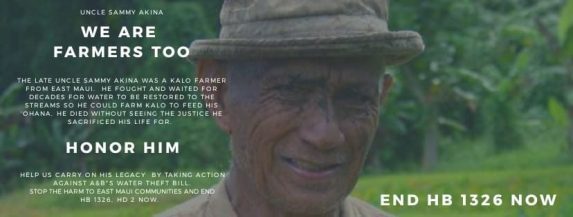
Image courtesy of Native Hawaiian Legal Corporation

“The late Sammy Akina was a kalo famer from East Maui. He fought and waited for decades for water to be restored to the streams so he could farm kalo to feed his ʻohana. He died without seeing the justice he sacrificed his life for.

Honor him.

Help us carry on his legacy by taking action against A&B’s water theft bill. Stop the harm to East Maui communities and end HB 1326 HD2 now.


Posted in Uncategorized | 3 Comments

The DLNR Does Not Even Support HB1326 (corporate water theft)

If for some reason you remain unconvinced that HB1326 is a bad bill and not at all actually needed, please read the below and see clear proof that the Department of Land and Natural Resources (DLNR) did not think HB1326 was necessary and has never supported its passage (until of course the governor decided to interject himself into the discussion on behalf of A&B).

It is important to note also that on December 31st 2018, the Department of Land and Natural Resources (DLNR) submitted a report to the legislature entitled Water Rights Disposition report that stated: “In light of the ongoing cooperation among the various agencies involved, DLNR does not have any immediate recommendations for further legislative action or funding at this time…”

(no mention of the supposed hundreds of farms that will be without water unless the bill passes)

Then later on February 8th in testimony before the House Water Land Committee, the DLNR did not even support HB1326 but offered comments stating: “…it appears that Act 126, Session Laws of Hawaii 2016, already provided for continued holdover for the revocable permits beyond the initial three year period.” Actual testimony is HERE

(still no mention of the supposed hundreds of farms that will be without water unless the bill passes)

On February 25th, the DLNR stated in testimony essentially, ‘everything is on track, the various agencies (including the attorney generals office) are all working together with the permittees on this.’ (paraphrased) Actual testimony is HERE

(you guessed it…still no mention of the catastrophic circumstances that will ensue unless HB1326 is passed)

Again on April 2nd, in testimony before the Senate Water Land Committee, the DLNR makes no mention of any pressing or urgent need to pass any legislation at all. Actual testimony is HERE

(by now I hope you are starting to get the picture)

In fact none of the testimony provided by any of the proponents ever even comes close to suggesting the catastrophic circumstances now being run up the flag pole that, “hundreds of farmers will lose their water” if a bill does not pass.

Of course the real pudding…as in the “proof is in the pudding”- is the fact that Senator Kahele proposed passing an amended SD1 that took out A&B but left in the so-called small farmers.  But of course this proposal was rejected by the pro A&B Senate faction led by Senator Dela Cruz.  This is more proof that the small farmers and ranchers are only being used to provide cover for A&B, and all the faux outrage “to protect small farmers” is posturing rhetorical bs.

In any case, the $62,000,000 benefit to A&B will fund a lot of this type of disingenuous hype and you can be sure they will push to the end, and beyond on this.

We must remain vigilant and fully engaged on this.  We are hearing strong rumors again that the pro A&B Senate faction will be trying a last ditch effort to again pull HB1326 HD2 to the floor for a vote, this Tuesday April 30th at 10am.  A few of us will be gathering at the Queens statute at 9:30am and then sitting in the gallery to witness whatever, may or may not happen.

Please join us if you can.  Plus…pass the word.  We need everyones help to once again…!

1) Call AND Email your Senator: Let him/her know you are paying attention and do not support the Senate resurrecting HB 1326 HD2. Please ask him/her to stand with the people and not corporate interests.

Thank you!

Note: To be receive my semi regular email missives/newsletter (not really a newsletter but not sure what to call it) – Please subscribe to my mailing list here:

Posted in Uncategorized | Leave a comment

Lessons from the ledge: The end of session (or not)

The 2019 legislative session ends, sine die on May 2, and any bills that have not been passed by both the House and the Senate by this date will be dead (for real this time but not really).

Like most of the rules and statements made about the legislative process, this of course is not entirely true.

First of all, 2019 is only the first year of a two-year “biennial” session. This means that ALL bills, unless explicitly voted down (which almost never happens), are technically alive through and until the end of the 2020 session.

All of the 2019 bills remain frozen at whatever place in the process they ended up on May 2, and in theory can be revived during the 2020 session and begin again at that point in the process.

Typically however, legislators prefer to start with a clean slate and will reintroduce bills the following year rather than use old measures that stalled in the first year of the biennium. But this is not required and if they so choose, bills that are in conference or in their final committee, may be revived and passed without enduring the entire House/Senate journey again.

It is also not entirely true that the deadline to pass bills is May 2. The reality is that most or all bills must clear the Conference Committee process by this Friday. This is necessary so that they can then proceed to their final floor votes, with the required 48-hour notice.

For those following HB1326 HD2 (corporate water theft), April 30 appears to be the very last possible day it could be “pulled out of committee” and put to a floor vote in the Senate. If that should happen, the Senate would then have to vote again on the same bill on May 2. I believe it is unlikely that this will occur and numerous senators have stated publicly that there is no interest or intent to revive this bill.

If the Senate backtracks, and decides behind closed doors to pull a last-minute surprise maneuver such as this, you can be sure fireworks will ensue on both dates.

For now, this time is mostly a wait and see game as the Conference Committee process plays out.

For the serious advocate however, this is not a time for complacency but rather a time to pour it on. You can assume “the other side” is doing the same — walking the halls, sending the email and making those all important phone calls.

As to who to call and email, it is always YOUR district senator and YOUR district representative — first!

Then, locate and contact the members of the Conference Committee as well by plugging in the bill number at capitol.hawaii.gov

As I have said repeatedly, your voice matters especially to the senator and representative who is elected to serve you and your district.

Please get involved and take ownership of your government.

And stay tuned. Next week’s column will include a summary report of bills passed and not — as by Tuesday afternoon, April 30, it should all be over (unless of course the Senate goes crazy and decides to try to pass HB1326).

Oh, I almost got to mention one final “wild card”.

The governor could, if he thought the issue important enough — call the Legislature back immediately into a special session and ask them to deal with any issue he might believe rises to a high level of importance.

First published on April 24, 2019 in The Garden Island Newspaper “Policy and Politics” column.

Posted in Uncategorized | Leave a comment

Get past manufactured crisis, and have state move on water permits – Hooser column published Sunday April 21, in Honolulu Star Advertiser

In my 20 years of experience in government, politics and policy-making, House Bill 1326 is the most egregious example of special-interest legislation I have ever seen.

Fortunately the state Senate has taken time to listen to public concerns. After weighing both sides, conducting a thorough public hearing, asking tough questions and even visiting the Maui community most impacted, the Senate led by Water and Land Committee Chairman Kai Kahele has decided to shelve HB 1326.

Key Senate members have stated publicly they have no intention of passing HB 1326, but technically, it remains alive. Until the session ends May 2, anything can happen.

Alexander & Baldwin (A&B) stands to gain or lose $62 million, depending on the outcome of HB 1326. In essence, it is attempting to sell public trust water rights derived from stream diversions in east Maui. The intended beneficiary of this transaction is Mahi Pono — a California-based LLC, financed by a Canadian pension fund — which recently purchased the majority of A&B lands on Maui.

One fairly significant problem with this proposal is that A&B neither owns, nor has long-term control over this water.

In Hawaii, whether beneath the ground or flowing through our rivers and streams, water is a public trust resource. Businesses may use the resource, but must secure a permit that ensures sufficient water remains in the stream to preserve its natural ecosystem and that down-stream users also have access.

Yet this one company, the last remnant of the “Big 5” plantation era, and arguably the most politically powerful private landowner in Hawaii, is attempting, with the Legislature’s help, to secure those water rights without securing the proper long-term permits, and then transfer those water rights to Mahi Pono — pocketing a cool $62 million in the process.

The original HB 1326 proposed giving A&B and a handful of others an unlimited amount of time to divert an unlimited amount of water, without securing the permits and without ensuring environmental or down-stream user protections.

The present measure, HB 1326 House Draft 2, allows them 10 years, three of which have already passed, to comply with permitting requirements and convert their “temporary” one-year revocable permits (RPs) to proper long-term water leases.

Though A&B is the primary proponent and largest beneficiary of the measure, nine other RPs also are impacted by HB 1326 HD2, including some utilized by small ranchers and farmers.

The current controversy surrounding the plight of the small farmer and rancher is a manufactured crisis, perpetuated by the primary beneficiaries of HB 1326 HD2 and designed to promote fear and uncertainty.

The state Department of Land and Natural Resources (DLNR) has issued RPs to small users in the past without a problem. There is no specific legal impediment that prevents DLNR from extending the temporary RPs of these particular small farmers and ranchers while they pursue long-term leases.

The DLNR could provide certainty today, to all concerned by simply announcing its intent to continue extending the RPs of small users, so long as they demonstrate good faith and positive intent in pursuing a proper long-term water lease.

To his credit, Kahele, while acknowledging that DLNR could act unilaterally to resolve the situation, offered up a compromise that protected the little guy, while holding A&B accountable. Unfortunately, this overture was rejected.

The underlying problem is DLNR’s inability to manage the permit process. However, it’s neither the Legislature’s job nor in the public’s best interest to attempt to fix bad management with bad special-interest legislation.

And it’s certainly not the Legislature’s job to bail out a company that sold water rights it does not own.

It’s time the Legislature demand that the DLNR do its job. We, the collective community and the Legislature, need to move past the distraction and passions generated by HB 1326, and focus instead on the myriad other important bills begging for our time and attention.

Gary Hooser, a former state senator and Kauai Council member, is board president of Hawaii Alliance for Progressive Action (HAPA) and executive director of Pono Hawaii Initiative.

Gary in black jacket in Geneva
Posted in Uncategorized | 2 Comments

An Easter message – Let’s pull together for working men and women and push a little extra today and tomorrow, for a strong increase in the minimum wage.

Hope everyone is enjoying their Easter Weekend.

I am hoping we can all pull together for a moment today and tomorrow in support of those in our community and their families who struggle daily, just to make ends meet.

Please if you can, read this excellent piecein Civil Beat, How Would Queen Liliuokalani And Father Damien Legislate? by Dawn Morais Webster

Please also forward it to your friends, family and to legislators as well –today if you can.

My hope is that you share my belief that if a person works hard and puts in their 40 hours per week, they deserve a wage that will provide them with a dry safe place to live, 3 meals a day and basic medical care.

My further hope is that you will join with me in calling your District Representative and Senator this Easter weekend.

Please call and ask them to support increasing Hawaii’s minimum wage to at least $15 per hour, for ALL workers– and put them on the path to a basic living wage of $17.

It’s an easy call to make. You will probably get voice mail and then the Senator and Representative will be greeted on Monday morning by your message,and the message hopefully of hundreds others.

Polite and professional please!

In addition to calling YOUR Senator and Representative, please also call the following who are members of the conference committee for SB789. 

Remember, polite and professional but firm – $15 passed this year for ALL workers.

REPRESENTATIVES Johanson (586-9470); Luke (586-6200), Cullen (586-8490) and Matsumoto (586-9490) and SENATORS Taniguchi (586-6460), Keith-Agaran (586-7344), and Fevella (586-6360)

Polite and professional but firm.

Let’s make this effort together, this weekend to help working people through-out all Hawaii.  These Senators and Representatives have already voted in support of various minimum wage bills several times this session. We are asking them now to move a strong bill to the floor for the critical and all important final vote.

Please treat them as friends and allies. Appeal to their higher angels, and ask them to do the right thing and pass a strong measure THIS YEAR.

If you presently earn less than $15 per hour, please let them know.  If you are a Democrat, please also let them know and remind them that supporting $15 per hour and living wage legislation are top priorities for the Democratic Party of Hawaii.

If you live in their district, also please let them know that as well as this makes your voice and opinion even stronger.

To locate the name and contact information for your district and for all Senatorsand Representatives, just click on the highlighted preceding links.

Mahalo to all for taking this extra step over this very special weekend.

Sincerely,

Gary Hooser http://www.garyhooser.com

Executive Director, Pono Hawaii Initiative (PHI)

Posted in Uncategorized | 1 Comment

Legal Opinion Refuting Governor’ Position on HB1326 (corporate water theft)

MEMORANDUM
Date: April 19, 2019
To: Governor’s Office, Hawai‘i Legislators, and any interested fellow citizens From: Isaac Moriwake, Esq., Earthjustice

Re: Legal response to the Governor’s letter dated April 18, 2019 and the Administrative Director’s memorandum dated April 15, 2019 regarding HB 1326, HD 2, relating to water rights ___________________________________________________________
The following discussion responds to Governor Ige’s letter and Administrative Director Fuchigami’s attached memorandum, dated April 18 and 15, 2019, respectively.

In summary: the Ige administration’s support of HB 1326, HD 2: (1) rests on a false premise concerning the legal effect of the circuit court order in the Carmichael case involving Alexander & Baldwin (“A&B”); (2) lacks any justification based on the terms of the order itself; and (3) runs afoul of the constitutional public trust doctrine and principles of good governance.

The Administration’s Position Rests Entirely on a False Legal Premise.

The Ige administration’s position and the supporting memorandum from Administrative Director are legally mistaken. Indeed, this entire affair is a house of cards built on the false legal premise that somehow the state circuit court’s Carmichael order “likely applies to all pending lease applicants” (Mem. at 4). Not so, for several obvious reasons:

● First, it is well‐established law that such “unpublished decisions of trial courts have no precedential value.” Chun v. Bd. of Trustees of the Employees’ Ret. System, 92 Hawai‘i 432, 446 (2000).

MID‐PACIFIC 850 RICHARDS STREET, SUITE 400 HONOLULU, HI 96813
T: 808.599.2436 F: 808.521.6841 MPOFFICE@EARTHJUSTICE.ORG WWW.EARTHJUSTICE.ORG

Memorandum in Response to Ige Administration Page 2 of 4

● Second and related to the previous, the decision only applies to the specific parties in the case—i.e., A&B. See, e.g., King v. Order of United Travelers of Am., 333 U.S. 153, 160‐61 (1948) (observing that a state lower court decision “is binding solely upon the parties who are before the Court in that particular case and would not constitute a precedent in any other case” in state or federal court).

● Finally, the decision is on appeal, so it is not legally final. See State v. Von Geldern, 64 Haw. 210, 214 (1981) (recognizing that the judgment of the trial court “was not final since [the] appeal was still pending”).

These elementary‐level legal points should be not be novel or esoteric to the Ige administration and those it is relying on for legal advice. Rather, it appears more likely that the administration and its attorneys general simply prefer to ignore this law, or misinterpret it to suit other, non‐legal purposes.

The Carmichael Order Does Not Support the Adminstration’s Alarmist Position.

Moreover, actual review of the terms of Carmichael order (as opposed to false, unsupported claims about what it says and means) makes even clearer that it applies narrowly and does not prohibit the land board from continuing to issue revocable permits to small farmers and ranchers, as the administration has hyperbolically claimed. (See the relevant page of the order attached hereto as Exhibit “A.”) The order observes that A&B’s “holdover” status (which is a made‐up scheme that the land board afforded only to A&B) continued for 13 years and specifically rules that “A&B’s continuous uninterrupted use of these public lands on a holdover basis for the last 13 years is not the ‘temporary’ use that HRS Chapter 171 envisions.” Id. at 4, ¶ 6 (emphasis added).1 The order further explains that “[o]therwise, holdover tenants
1 In this context, those familiar with the long history of injustice and mismanagement by the state in its dispositions of water from state lands in Hawai‘i can only find the administration’s statement that “it is clear that the law cannot be applied in a discriminatory

Memorandum in Response to Ige Administration Page 3 of 4
could arguably allowed to occupy public lands almost in perpetuity for continuous, multiple one‐year periods.” Id. (emphasis added). Nowhere does the order purport to impose any bright‐line restriction or time limit on revocable permits (as opposed to A&B’s makeshift holdover). Rather, the order simply states that endless holdovers practically “in perpetuity” are “inconsistent with the public interest and the legislative intent.” Id.

EarthJustice, Sierra Club, and others have sought to convey to the Ige administration that it should exercise leadership and chart a proactive and practical path forward, especially for smaller water users whom no one opposes—instead of threatening to cut off those users based on an extremist overreaction to and misrepresentation of a limited, non‐precedential trial court order. Thus, the Ige administration, if it were focused on finding solutions, rather than exacerbating problems, could continue to issue permits to such minor users, in recognition of the public interest in such an accommodation, and subject to certain conditions also in the public interest: e.g., that the users are making diligent progress toward longer‐term applications and approvals and will not harm the resource. This path forward would comply with the specific terms of the Carmichael order (again setting aside that the order does not apply to other parties), insofar as it would not allow the current situation to continue “in perpetuity.” It would also be entirely consistent with the statute and the public interest. See Haw. Rev. Stat § 171‐58(c) (allowing the issuance of permits “under those conditions which will best serve the interests of the State”).
fashion” (Ltr. at 2) more than a little ironic.

Indeed, the very problem that precipitated the court’s ruling in Carmichael and the subsequent repeated debacles around legislative “fixes” was the state’s blatant discriminatory application of the law in favor of A&B.

Memorandum in Response to Ige Administration Page 4 of 4
The Administration’s Proposed False “Solution” Does “the Wrong Thing, the Wrong Way, for the Wrong Reasons.”

Ironically, the false “solution” that the Ige administration proposes—i.e., a blanket bailout or free pass under HB 1326 without any conditions or principled direction—is actually the path that is legally suspect, since it would completely abdicate the state’s public trust duties over water resources in favor of private commercial interests, in violation of the constitutional public trust doctrine. See In re Waiāhole Ditch Combined Contested Case Hr’g, 94 Hawai‘i 97, 130‐ 31 (2000) (emphasizing the “doctrine’s basic premise, that the state has certain powers and duties which it cannot legislatively abdicate”). This attempt by the administration to further interfere with the ongoing judicial process in the Carmichael case involving A&B, and to pressure the legislature to fix a problem that the administration and its attorneys created and have the full ability and responsibility to untangle, is also a failure of leadership and good governance. It does nothing to facilitate a genuine, sustainable solution and in fact has the opposite impact because, in the timeless words of Dr. Martin Luther King, Jr., “there can be no peace without justice.”

In short, the Governor’s position based on Director Fuchigami’s memo is the wrong decision, done the wrong way, for the wrong reasons.

EXHIBIT “A” TO EARTHJUSTICE MEMORANDUM

Posted in Uncategorized | Leave a comment

The Conference Committee: Where bills are laid to rest quietly, with little fanfare and no fingerprints.

As we enter the last two weeks of the legislative session, it is a good time to explain the basics of the Conference Committee process.  Please, stifle the yawn and force yourself if possible to read on.  I promise that both, those of you who are intrigued and those who may be baffled by the lawmaking process, will find this fascinating.

If you are looking for the positive and optimistic, please jump to the conclusion.   As those who know me, know by now – I am not prone to sugar coat the reality that is the legislative process.

Please hang in there with me, as we navigate some of the twists and turns.

We start with the premise that the most important thing to the vast majority of elected officials, is to remain elected.  As I have said before, this is not a bad thing.  If you believe in the work you are doing, you want to keep doing it.  This is human nature.

Next we acknowledge that every time any vote is cast, someone’s ox is gored and thus there is a political price for every vote.  Every issue has multiple facets and every time a politician chooses a side, he or she loses some degree of popularity and political good will.

A legislator can vote to pass a bill or to not pass a bill.  Both of these votes have political repercussions.

Somewhere along the line, some astute politician figured out if they wanted to cut their political risk in half they should cut the amount of votes they cast in half as well.  This has resulted in a system in which politicians only vote in situations where the bill will pass.  They never vote in opposition to anything and voila, their political exposure is instantly cut in half. To further minimize the political risk, the vast majority of all votes are also “encouraged” by the legislative leadership to be unanimous.

In short, the legislative process is designed to minimize voting, especially voting on issues of controversy that do not enjoy broad unanimity of support.

Are you still with me?  I hope so because now that we have established the foundation of the “why they are doing this”, we will get to the “how they do this”.

How does the legislature process several thousand bills, pass only several hundred and avoid voting no on the rest?

The first and easiest method to kill a bill without voting is to have the Chair of the Committee responsible for the bill’s subject matter, simply not schedule a hearing.  Boom, the bill is dead. The second most common way to kill a bill is when a committee hears a bill but the Chair recommends to “defer indefinitely”.  This motion is an interesting one and there is not a vote nor is there any debate.  But, boom, boom – the bill is dead.

At this point in the process, the bills that have survived go on to the infamous “Conference Committee (CC)” which is a committee made up by members of the House and Senate, whose purpose is to “reconcile the differences” between the House and Senate “positions”.

The CC rules are rather arcane, but essentially state that the Chair of the Senate Ways and Means Committee (WAM) and the Chair of the House Finance Committee, (FIN) have veto power over any and all bills that have “fiscal impacts”, which essentially means…errr…any and all bills!

The rules also state clearly that CC meetings must be public, and further make it clear that the public may not speak at those same public meetings. At these public meetings there is also no process for submitting formal public testimony to the CC, though individual CC members may be sent email or contacted directly (outside of the formal meeting).

At least 24 hours notice is required for the first CC meeting but subsequent meetings on the same day may be rescheduled until midnight on that day without additional public notice, so long as it is announced in public at the prior meeting. The rules state that notice for these subsequent meetings be made “as soon as possible” but there is no minimum requirement.

As you can see (insert heavy sarcasm here), these public meetings are designed to provide easy access for the public, especially that 1/3 of the public residing in areas that require an airplane ride in order to attend (and not be able to speak).

There are myriad ways to kill bills at this point, without anyone casting a vote,

  1. The House Speaker and/or Senate President can simply not name Conferrees to the CC.
  2. Any Chair of the CC (there will be at least 2, one for Senate and one for House) can refuse to schedule a CC meeting, or fail to sign the meeting notice.
  3. The CC can just announce they could not reach an agreement.
  4. The member of the CC that represents WAM or FIN on the CC can refuse to agree.

NOTE: WAM and FIN can argue virtually every bill has “fiscal implications” as any “action” of any kind will require some staff time to implement, which has a budget impact of sorts.

Technically a majority of members of the CC are required to pass a bill out of the CC, but the member designated to represent WAM or FIN has the power to kill any bill, regardless of the CC’s majority decision.

So, how can the public be involved and effective in such a byzantine political environment?

First, be aware of what is happening and who is involved.  Email and call all Conferees which are listed on the bill’s “status” sheet that is available at www.capitol.hawaii.gov  If you can afford the time, show up at the CC meetings and use social media to report on the progress or lack of progress.

Second, remember that at the end of the day the “majority” of members are responsible for the actions of House/Senate leadership.  Contact “your” Senator and Representative and let them know your thoughts and feelings about the issue.

The jury is still out on 2019 legislative session.  There remains potential for it to be a great one and to pass initiatives into law that promote a bold and positive economic, environment and social justice agenda.  Or, they could decide to err on the side of mediocrity, and fail miserably.

The actions of legislators, both individually and collectively have tangible consequences. People and the planet suffer when they fail to take positive actions and instead fall back on the default and once politically safe position of accepting the status quo.

While some might wonder how it is possible, I do believe in our system of democracy.  Yes, it often fails to deliver on its promise and potential, but to paraphrase Winston Churchill, I know of no other system that is better.  It is up to us to take ownership of our government, to be involved, and to take responsibility for its successes and its failures.

First published in The Garden Island newspaper: April 17th, 2019

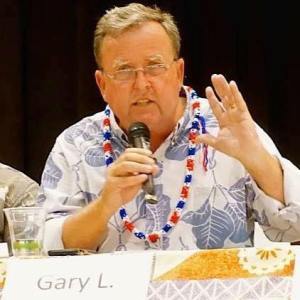
gary at mic with lei


Posted in Uncategorized | 2 Comments

Excellent Status Summary of 2019 Progressive Bills as of April 12, 2019 – courtesy of YPDA!

Economic Justice Measures

The following Economic Justice Action Committee bills have made it through second crossover. Click on a link to send a message of support.

  • SB789 SD2 HD2 & HB1191 HD1 SD2 both propose to raise the minimum wage. How that happens will depend on a Conference Committee draft. Ask the likley conferees to support a $17 minimum wage for all workers, to consider a tax credit for employers that provide health insurance, and to keep language that would eliminate the subminimum wage for disabled workers. Send email.
  • SB301 SD1 HD1 would close the tax code loophole that allows Real Estate Investment Trusts to make $billions off of Hawaiʻi land and natural resources without paying a dime in corporate income tax to the state. As it stands, this bill does not propose to deposit any of the new REIT revenue into the rental revolving fund, where it would help fund affordable housing development. Let’s ask the conferees to change that. Send email.
  • SB390 SD2 HD1, the SNAP Double Up bill, would help low-income families have access to fresh, locally-grown produce, while also channeling federal funds into local agriculture by requiring the Department of Agriculture to create a dollar-for-dollar matching program for beneficiaries of the federal Supplemental Nutrition Assistance Program (SNAP) to purchase Hawaiʻi-grown produce. Send email.
  • SB9 SD1 HD1 would establish a Section 8 insurance fund from which landlords could be reimbursed should their units be damaged after renting them out via Section 8 to low income renters. While our position is that this fund is unecessary and while we oppose the premise that low-income renters are not good tenants or trustworthy because they are poor, the reality is we are in an affordable housing crisis and Section 8 wait times are far too long. If landlords need this reassurance to make their units available to low income families, then so be it. Send email.
  • HB1274 HD1 SD1 would affirm the right of graduate student workers at the University of Hawaiʻi to form a union and collectively bargain. This is a fundamental labor right, and it is disgraceful that Democrats—whose party dominance in Hawaiʻi was built on the power of organized labor—would oppose this basic human right for workers. Send email.
  • HB1193 SD1 & HB1190 HD1 SD1, two tax fairness bills, would both bring a greater level of equity to our state tax system by increasing the Child and Dependent Care Tax Credit, and eliminating the lowest income tax bracket for people in poverty, respectively. Both are small adjustments, but both can be significant help to struggling families in Hawaiʻi. Send email.

Social Justice Measures

The following Social Justice Action Committee bills have made it through second crossover. Click on a link to send a message of support.

  • SB192 SD1 HD2 authorizes unsecured bail for nonviolent and indigent arestees and implements some of the pretrial taskforce recommnedations, which would alleviate some of the overcrowding in our county jails caused by mass incraceration of nonviolent offenders. It’s a small step toward badly needed criminal justice reform, but one well-worth supporting. Send email.
  • HB1383 HD2 SD1 would decriminalize possession of small amounts of cannabis (3 grams or less) and allows for expunchment of criminal records for those convicted of posession of 3 grams or less. The bill would also create a taskforce to make recommendations on changing marijuana use penalties and outcomes. This is a baby step toward genuine drug policy reform. This may be our last chance to ask for a stronger bill. The decriminalized amount should be at least as large as the amount allowed under medical marijuana laws, which is 4 ounces. Send email.
  • HB285 HD1 SD2 would eliminate the exemption county police officers currently enjoy that hides records of their misconduct from the public. This is a police transparency and accountability measure that, in light of an already especially deadly year in law-enforcement, to say nothing of documented instances in which the public’s need to know would have prevented further tragedies from occuring, is badly needed. Send email.
  • SB1025 SD1 HD2 would expand the Kupuna Caregivers program, a badly needed system of support for caregivers who, often, are working multiple jobs themselves while caring for aging loved ones. As Hawaiʻi’s population continues to skew toward the older end of the spectrum, this support will become increasingly important. Send email.
  • SB471 SD2 HD1, HB1312 HD1 SD1, SB567 SD2 HD2 and SB1124 SD2 HD1, together, form a homelessness services package being supported by Partners In Care and Bridging the Gap. The bills will provide wrap-around homelessness services, an investment in housing first and affordable housing subsidies, and provide mental health services (the final two), respectively. Send email.

Environmental Justice Measures

The following Environmental Justice Action Committee bills have made it through second crossover. Click on a link to send a message of support (or opposition for the last three).

  • SB522 SD2 HD2 creates the plastic source reduction working group to make recommendations for eliminating single-use plastic packaging, establishes the Solid Waste Prevention Coordinator within the Department of Health, and appropriates funds. This does not go nearly far enough in protecting our environment, so we’re asking for the conferees to strengthen it. Send email.
  • HB765 HD1 SD2 & HB1487 HD1 SD2 would each move us toward better planning for sea level rise and climate change when it comes to new construction and urban planning. Send email.
  • HB1586 HD1 SD2 was once a bill aimed at establishing a badly-needed, new executive department dedicated to all things environment and renewable energy. Short-sighted politicians pulled a Gut & Replace on this bill, and now it’s the vehicle for the Aloha Stadium redevelopment project. Without getting too much into the weeds, stadiums are not economic drivers, they are economic sink holes. This shows where the priorities of our “leaders” lie. We need to demand that this bill be reverted back into a vehicle to establish the new Department of the Environment. Our future depends on a healthy planet, not a healthy college football following. Send email.
  • HB307 SD1 expands the definition of “renewable energy” to a dangerously vague level (“other self-replenishing non-fossil fuel resources”). This bill’s language is too broad and could have terrible repercussions on our renewable energy future in the islands. Send email.
  • HB1025 HD1 SD2 allows the Board of Land and Natural Resources to issue lease extensions without any oversight. Send email.

Open Government Measures

The following Open Government bills have made it through second crossover. Click on a link to send a message of support (or opposition for the last three).

  • SB412 SD2 HD1 & HB1485 HD2 SD1 each establish Automatic Voter Registration measures in the state of Hawaiʻi. HB1485 adds high school students, 16+, to an in-school, optional pre-registration initiative to even further boost the participation of young people in democracy. Send email.
  • HB1248 HD1 SD2 would expand the Vote By Mail pilot program Hawaiʻi lawmakers passed last session by enacting voting by mail uniformly across all counties for all elections commencing in 2022. A small number of polling places would still remain open to process in-person votes, but the reality is that anyone who can vote in person can also vote by mail, but the opposite is not true. Vote By Mail expands access to democracy for rural voters, kupuna, military servicemembers and young people. Send email.
  • SB427 SD2 HD1 would establish Ranked Choice Voting for special federal elections and special elections of vacant county council seats. It’s a pilot bill, but there’s no reason we can’t suggest that the conferees expand the measure to establish RCV in all elections. RCV is a fundamentally more democratic way of voting, and with today’s technology, it can be easily implenented to save the state money by eliminating the need for a primary election. Send email.
Stay tuned for more action alerts on this and other issues coming out of our committee reports. Subscribe below:

Additional Resources:
Living Wage Talking Points
Bail Reform Talking Points
Marijuana Legalization Talking Points
Automatic Voter Registration Talking Points
Posted in Uncategorized | Leave a comment

Candidates wanted for 2020 elections and beyond. Kuleana Academy Application Deadline is TODAY, April 15.

We can carry signs, and we should,  We can organize and we can march, and yes we should do this as well.  And absolutely we must offer testimony and write letters to the editor.  And we must vote, and support candidates that represent our values.  

But if we want real change that will make a tangible difference in our lifetime, we must run for and serve in public office – at all levels.

2020 will be a watershed year.

If you believe in the values of economic, environmental and social justice, and if you aspire to help lead in the effort to promote these values, and if you are willing to do the hark work necessary to achieve these ends – Please apply TODAY to the Kuleana Academy.

“We need aloha aina, community based, forward thinking people to take advantage of this program and run for office, because we need more of you…” Keani Rawlins-Fernandez, Maui Councilmember and Kuleana Academy Graduate

“I have to credit my success 100% to Hapa’s Kuleana Academy…” Representative Tina Wildberger

Watch this short 3 minute video, then go to https://www.hapahi.org/kuleana-academy and apply TODAY, April 15 – If you are rooted in your community and have the desire, the values and the work ethic needed to make real change happen – Please Apply!

The Kuleana Academy is a statewide leadership development and non-partisan candidate training program hosted by the Hawaiʻi Alliance for Progressive Action (HAPA) in partnership with other leading public interest organizations in Hawai’i.

Participants from all island attend six (6) weekend trainings on O‘ahu (over 4 month period) in leadership and personal development, public speaking, and media training. They will also learn critical community organizing skills, the basics of the legislative process and Boards and Commissions, as well as campaigning skills.  Transportation and accommodation costs will be provided by the Academy, and applicants from all islands are encouraged to apply.

The core of HAPA’s mission is to catalyze community empowerment and systemic change – change that goes to the root of our social, economic and environmental injustices. In order to fulfill that mission, HAPA believes that Hawai‘i needs more progressive government leaders who value ʻāina (environment or “that which feeds”) and people ahead of corporate profit.

The Kuleana Academy is designed to educate and train grassroots leaders who have a desire to serve in public office, as community organizers, or on Hawai`i’s Boards and Commissions. The program provides participants a well-rounded introduction to critical social, economic and environmental issues in Hawai‘i, as well as in-depth leadership development training and the ins-and-outs of campaigning.

Posted in Uncategorized | Leave a comment