The $13 message – it’s all about the subject line. Email legislators NOW.

Please help today, especially by the end of the day on Wednesday, January 29th, if you can –  The 2020 Hawaii State Legislative Session has begun and we need to get this important message out BEFORE THE HEARINGS START.

1) Email your District State Representative and Senator and let them know that $13 per hour is not acceptable and that Hawaii workers deserve a living wage.

Do your best to put your core message into the subject line!

Make sure the legislator knows that you live in their district.  Include your name and the island/town you live on in the body of the email.

Keep your message brief.  It’s all about the subject line and the fact that you live in the district they represent.

2) If you have already reached out to them, please do so again.  Keeping it very short is fine.  They are very busy during the session, but they still needed to be reminded of the importance of this issue.

Be respectful and professional, please.

3) Identify your District Representative and Senator and get their contact information HERE  https://www.capitol.hawaii.gov/findleg.aspx

If the above link is not working for you (it can be fickle), you can also click here to locate your Hawaii State Senator and Representative.

Email them BOTH.  It is important that your email identify the fact that you are a constituent and that you live in the district. 

And for this message – It’s all about the subject line!

Please also cc the email sent to your Representative to reps@capitol.hawaii.gov and cc the email sent to your Senator to sens@capitol.hawaii.gov


Posted in Uncategorized | 8 Comments

Turning marchers into voters, learning from the revolution of ’54

On March 28, 2019, over 2,500 Kaua’i residents marched on Rice Street. On O’ahu, over 20,000 marched through Waikiki. Similarly, on Maui and in Hawai’i County – thousands marched – For, justice and for Aloha ‘Āina.

Depending on the exact district, it can take less than 2,500 votes to win a State House seat and 7,500 votes to be a State Senator (some districts more and some districts less).

It doesn’t take a rocket scientist to figure out what could come next.

Imagine what could happen if those who marched were all registered to vote, all actually did vote, and their votes were focused on qualified credible candidates who supported their world view.

The potential for change is palpable.

Because all legislative decisions are driven by a “majority” and assuming there are already some legislators holding office now who share the values of those who marched – only a relative handful of newly elected individuals are needed to achieve bold systemic change.

Hypothetically speaking of course – if one wanted to plan or plot a Hawai’i political revolution – a very rough, “back of the envelope” estimate of the number of newly elected individuals needed might be as follows.

State House of Representatives: 51 Representatives total, thus a majority is 26.
State Senate: 25 Senators total, thus a majority is 13.

There are a handful of champions in both the House and the Senate, and numerous others who, when the crunch comes, will “do the right thing”.

Consequently, it is not necessary for those who seek a revolution, to achieve a clean sweep of all seats. In addition, because of the “multiple faction” nature of organizational leadership, electing even just 12 new legislators in 2020 would equate to a political earthquake not seen since the often heralded “Democratic Revolution of 1954”.

Of course, more is better, but the election of even just 12 new legislators who embrace the values of Aloha ‘Āina, put people and the planet above corporate greed and who recognize the urgency of the moment – would be huge.

The history is important:
“The Hawai’i Democratic Revolution of 1954 was a nonviolent revolution that took place in the Hawaiian Archipelago consisting of general strikes, protests and other acts of civil disobedience. The Revolution culminated in the territorial elections of 1954 where the long reign of the Hawai’i Republican Party in the legislature came to an abrupt end, as they were voted out of the office to be replaced by members of the Democratic Party of Hawai’i…” Wikipedia

While the “Revolution of 1954“ was driven largely by the labor movement, history will look back at the “Revolution of 2020” and see that it was the “Aloha ‘Āina” movement accompanied by a strong “progressive base” that fueled the change.

The “in-your-face injustice” now occurring in Hawai’i that pertain to issues of economic, environmental and social justice added to the heightened cultural awareness and ongoing “Hawaiian Renaissance” – has created an ideal environment for the revolution now occurring.

The litany of historical abuse and injustice heaped upon the Hawaiian people is no longer buried in the history books written by their oppressors.

The mismanagement of our natural resources is self-evident, on every island.

The selling of public trust resources to the highest bidder, the diversion and ultimately killing of our streams, reefs and nearshore waters, the development of our sacred and once-pristine spaces – All it seems, facilitated by government agencies who see environmental regulations as impediments to development, rather than valuable public resource protections.

Government agencies charged with regulating various industries now seem owned by those same industries.

The multinational agrochemical industry continues to pollute both our drinking water and our nearshore oceans. Government is aware and does nothing.

Meanwhile the poor get poorer, the rich get richer, and their enablers in government wring their hands and offer excuses for their inaction.

Hawai’i legislators will be getting their pay increases – while minimum wage workers will get nothing.

Government sweeps away our houseless brothers and sisters while facilitating the construction of luxury high-rises and multi-million dollar homes.

And criminal justice reform? Our government finds it’s easier and cheaper to just ship Hawai’i citizens off to private prisons in Arizona.

Some will say that I am being too hard on the good people now sitting in public office. They are trying their best, these issues are complicated and some meaningful progress is being made.

Others will say that I am not being hard enough. Simply trying your best, complaining about the complexity of the issues and taking baby steps while the world is crumbling down upon us – equates to gross negligence and is unacceptable.

A close friend told me once, “Remember Gary, the “Revolution of ’54” did not actually happen in ’54…it happened in ’48, ’50, ’52 and then culminated in ’54.“

In any case, the revolution is upon us. Tens of thousands of new Hawai’i voters will be showing up in August, of this I am sure. New credible and qualified candidates, who share the Aloha ‘Āina world view and a mindset that put people and the planet first, are already beginning to throw their hats in the political ring – on every island.

More are sure to follow.

Political revolutions of the non-violent sort, are important and necessary. Complacency and corruption increasingly infect the body politik. The swinging of the pendulum is inevitable.

Please, if you have not already done so, register to here: https://olvr.hawaii.gov/

Imua.

Gary Hooser
First published November 6th, 2019 in The Garden Island Newspaper.

Posted in Uncategorized | 9 Comments

Breaking: Kauai Councilmember Arrested

The primary question being asked by people is “What happens next?”

Many want to know if/when Councilmember Brun will be removed from office and if/when that happens, how is his replacement selected.

First of all, Councilmember Brun is allowed his day in court.  While the news does indeed look very damning, there may or may not be more to the story.  More will no doubt be coming out very soon.

I will attempt a short answer here and expound on this no doubt in the coming days.

According to The Garden Island newspaper: 

“Kauai police arrested a Kauai County councilman Tuesday afternoon after he attempted to flee from police during a traffic stop.

Arthur Brun, 47, of Waimea, was arrested for resisting an order to stop a motor vehicle in the first degree and assault against a law enforcement officer in the first degree, according to a county press release.

According to a preliminary investigation, officers pulled over a dark tinted silver Honda sedan fronting the Lihue Post Office during a traffic stop. Police approached the driver when the driver fled with the vehicle, hitting the officer.

Police followed the vehicle to Kauai Beach Drive, where they successfully stopped and detained the driver. Brun was transported to Wilcox Medical Center for a medical evaluation, then brought to Police Cellblock where he remained Tuesday night. Bail has not yet been set.

The officer involved reported non-life threatening injuries. The investigation remains ongoing.”

This news broke overnight and needless to say, late into the evening I fielded many calls, texts and Facebook messages on this.

First of all, Councilmember Brun is allowed his day in court.  While the news does indeed look very damning, there may or may not be more to the story.  More will no doubt be coming out very soon.

Notes: 

Councilmember Brun presently Chairs the Parks/Recreation & Transportation Committee and is Vice-Chair of the Public Safety & Human Services Committee

According to Councilmember Bruns FaceBook profile he is currently employed by Hartung (formerly Syngenta) as their “Community Liaison”. 

Disclaimer: I am not a lawyer

What happens next?  

It is my understanding that Councilmember Brun may be charged with a crime or crimes and then either be released on bail or held in jail if he cannot afford bail – pending a court appearance.  Then, it is up to the lawyers.  The Councilmember will have his defense lawyer and the County will be represented by Prosecutor, Justin Kollar.   Typically the Prosecutor will prosecute, and or strike a “plea deal” to lesser charges (avoiding the time, expense and uncertainty of a trial).

It is important to remember – the incidents reported are allegations of a crime/crimes and there has been no legal finding of guilt of any crime at this point.

Will Councilmember Brun be removed from office?  

Essential reading – Click here for a copy of the Kauai County Charter

My fairly quick read of the Kauai County Charter seems to indicate that Charter does not provide a provision allowing for the prompt or easy removal of a councilmember except for felony conviction or if the member does not reside in the county.  

There are provisions to remove any elected official via impeachment, but that requires a petition signed by 5% of voters registered in the last election (which means approximately 2,250 VERIFIED signatures) AND it requires petitioners to pay their own legal fees. There are also provisions allowing “recall” but this only applies to the Mayor and the Prosecutor.

The bottom line is that the removal of a councilmember is not easy, nor straightforward. The Council itself could propose and pass a Resolution demanding a councilmember resign.  The ethics commission could possibly pass a similar measure.

Relevant or mostly relevant and thus interesting sections of the Charter are here:

Section 3.04: “B. Any councilmember who removes said councilmember’s residence from the county or is convicted of a felony shall immediately forfeit the office.”

Section 3.07 “D. The council may, upon an affirmative vote of at least two-thirds of its entire membership, suspend without pay for not more than one month any member for disorderly or contemptuous behavior in its presence.” Note: This seems to apply to actions that occur only during a council meeting.

Section 23.13. Impeachment of Officers. Any officer appointed or elected may be impeached for malfeasance, misfeasance, or nonfeasance in office. Such impeachment proceeding shall be commenced in the Fifth Circuit Court, State of Hawai‘i. The charge or charges shall be set forth in writing in a verified petition for impeachment signed by not less than 5 percent of the voters registered in the last general election, except as to charges filed by the ethics board. If the court sustains the charge or charges, such officer shall be deemed removed from office. The petitioners seeking the impeachment shall bear their own attorneys’ fees and other costs of such proceedings, except proceedings initiated by the ethics board, the cost of which shall be paid by the county. 

Section 27.01. Recall Procedure. Any elected officer serving a four-year term as provided for in this charter may be removed from office by the voters of the county. The procedure to effect such removal shall be in accordance with this article. A petition demanding that the question of removing such official be submitted to the voters shall be filed with the county clerk. Such petitions shall be signed by currently registered voters numbering not less than 20 percent of the voters registered in the last general election. (Amended 1984)

If a councilmember is removed or resigns from office, how is his/her replacement selected?

Charter Section 3.05. Vacancy in Office. In the event a vacancy occurs in the council, the remaining members of the council shall appoint a successor with the required qualifications to fill the vacancy for the unexpired term. If the council is unable to fill a vacancy within thirty days after its occurrence, the mayor shall make the appointment to such vacancy.

The process that has occurred in the past involves the Council announcing the vacancy and accepting applications and conducting interviews. This is mostly done in private executive sessions.  At some point a majority of councilmembers (4) during the executive session will come to a general agreement on a certain individual, then a public and discussion will be held and a public vote taken. The issue of “the next highest vote-getter in the most recent election” being the preferred choice is not a rule nor required.  The only requirement is that whoever selected be able to obtain at least 4 council votes.


Posted in Uncategorized | 7 Comments

Tulsi, Kahele…and the candidate stampede to follow

Congresswoman Tulsi Gabbard’s announcement that she would not be running for re-election, caught Hawaii’s political world by surprise.

Initially, conventional wisdom would say that Big Island State Senator Kai Kahele is the heir apparent.

But those more skilled in the sometimes dark arts of political maneuvering would say, “Perhaps, but then again perhaps not”.

To be clear, I like Senator Kahele. Though I do not know him well, his actions and his words during the past year indicate to me that at the end of the day he will choose people and the planet, over corporate greed.

How hard he will push back against the power and influence that maintain and perpetuate the status quo in Washington, D.C., I do not know. Whether he will fall into the trap of going along to get along, also remains to be seen. Of course, these same two questions apply to every candidate, for every office – federal, state, and county.

But so far, I like what I see, and think he is a good candidate who if elected, would serve Hawaii well.

However, the political reality is that at the moment, there are no other candidates and thus no one to measure him against.

Very soon other candidates will emerge, of this, I am absolutely sure.

The allure of a primary with no incumbent is simply too strong to resist.

Yes, Senator Kahele has a head start and yes, his campaign has apparently raised over $500,000, which indeed is a respectable sum.

However, there are at least a dozen others either now serving, or sitting on the bench who have similar or even greater name recognition, credible resumes, and the ability to raise the funds necessary to run a competitive race.

These 12 and undoubtedly, even more, are at this very moment discussing with friends, family, and potential donors – whether to jump, or not.

Each potential candidate is asking the same questions. How strong is my name recognition compared to Senator Kahele? Is my base of friends and supporters within the Second Congressional District (CD2), which is dominated by the neighbor islands, strong and diverse enough? How many of them might already be committed to Senator Kahele? Can I raise the money needed to win?

Very soon, someone who perhaps already has the money and the name recognition will jump in, and then in short order others will follow.

As more candidates enter the race, those with less fundraising capacity but perhaps strong name recognition and a dedicated base of supporters will likewise be emboldened to enter.

Prediction: Eventually there will be 6 to 9 credible Democrats splitting up the votes and battling it out for this much-coveted seat in the US Congress.

Further fueling the number of candidates jumping into the fray will be State Senators midway through their 4-year terms (as is Senator Kahele), with no requirement to resign their State Senate seat.

Add to the potential mix of credible candidates several City Council members who are terming out of their existing positions, and could also be interested.

Because Hawaii is essentially a one-party state, winning the primary on August 8, 2020, is everything. In the age of Trump, there is no way that voters in this particular district will elect a Republican to Congress – remember the CD2 is Patsy Minks district.

A crowded primary with no incumbent means it’s winner take all, and garnering a majority of the vote is not needed to win.

That’s correct – the winner need not have a majority to win. A plurality of any amount is sufficient to win the primary and move to the general where a symbolic, sacrificial and unelectable Republican will simply be holding space for their Party.

In the 2006 CD2 race, the dynamics were similar. In that race, 10 Democrats threw their hats in the ring. On primary election day, now US Senator Mazie Hirono was declared the winner after receiving only 20.7% of the vote.

I repeat, Mazie Hirono won with only 20.7% of the vote. For me, the memory is of course vivid.

Former Senate President (and eventually Congresswoman) Colleen Hanabusa came in second with 20%. Yours truly, then Senator Gary Hooser came in 5th at 9.7% just ahead of then State Representative Brian Schatz (now US Senator) at 7%. See the complete list and exact vote counts in the attached graphic.

In theory, the more candidates that enter the race, the smaller the slice of the vote pie potentially needed to win. Thus, candidates with a “strong base” (ideological, geographic, demographic or issue centered) but who might struggle to appeal to a broader majority, are especially drawn to enter the contest.

Hence the allure of a crowded primary with no incumbent.

Everyone who enters the race will believe their base is sufficient to win the day. Excessive optimism – it’s the nature of the beast carried within every candidate.

First published in The Garden Island Newspaper on October 30, 2019

Posted in Uncategorized | 15 Comments

Legislators get pay raises while minimum wage workers get nothing

The Aloha United Way commissioned ALICE REPORT: A STUDY OF FINANCIAL HARDSHIP IN HAWAI‘I determined than in 2017, 11% of Hawaii residents were living in poverty while another 37% exist on its very edge, only one paycheck away from financial disaster.

Every Hawai’i legislator serving in the Hawaii State Senate, and in the House of Representatives will receive a pay raise, starting in January of 2021. Likewise every member of the County Council, Director’s of County and State agencies, the Mayor, the Governor, the Lieutenant Governor, and State Judges – ALL THOSE IN POSITIONS OF POWER IN GOVERNMENT WILL RECEIVE A PAY INCREASE.

While legislators and top government executives are lined up for generous pay increases, OUR STATE LEGISLATURE MADE A CONSCIOUS DECISION ON APRIL 26 OF 2019 TO GIVE MINIMUM WAGE WORKERS NOTHING – ZIP, NADA, ZERO.

The State Department of Business Economic Development and Tourism (DBEDT), has determined that $17.50 per hour (approximately) is a “subsistence” wage for a single person. This means that a person needs to make $17.50 an hour to simply survive.

The minimum wage in Hawaii sits now at $10.10 per hour.

During the 2019 legislative session several bills were introduced intending to both increase the minimum wage, and to help small business.

Multiple hearings were held in the House and Senate. 1,000’s of people from all walks of life testified in support, many took off from work to do so in person and others paid to fly in from the neighbor islands. Countless hours were spent by many, waiting patiently for the committee to eventually call their name to offer testimony.

Though the data collected in the years following past increases in Hawaii’s minimum wage shows unequivocally that there has been no subsequent increase in unemployment, no increases in bankruptcies and no related increases in inflation- the Hawaii Chamber of Commerce insisted the sky would fall if the minimum wage was increased further.

It was the State House of Representatives who ultimately pulled the plug during the final days of conference committee. The excuse given, was that a provision intended to help business was, to paraphrase, “possibly flawed and not ready” and “there was not enough time remaining in the session to fix it”.

Rather than pass a stand-alone, strong but reasonable, minimum wage measure that phased in a $15 per hour wage over several years – the joint House/Senate Conference Committee swallowed the poison pill provided to them by the business community, and killed the entire measure.

The consequences are real.

Legislators will get their raises, but minimum wage workers will get nothing.

Wait until next year, submit another bill and we will try again during the 2020 session, is the familiar but somewhat disingenuous refrain.

The reality is that legislators have had many months now since the close of the session to work out the kinks, to meet with stakeholders, staff and the administration. They could and should have, (and hopefully actually have) come to an agreement by now on a clean bill, that can be passed promptly upon the opening of the 2020 legislative session.

There is no rule, law or any valid reason that the community should have to “submit another bill”, and go through the entire process again.

Though the past practice of the legislature may be to force the community to start again at the beginning and go through the entire process again, it is totally unnecessary to do so – except to perhaps accommodate the desire of the Senate President and the House Speaker, should they decide to require it.

The legislature operates on a two year cycle and every bill submitted in 2019, unless outright killed in a vote – is still alive.

There is no legal requirement to “start over from the beginning”. The legislature can merely pick up bills exactly where they were left off at the end of the 2019 legislative session.

HB1191,HD1,SD2 increasing Hawaii’s minimum wage to $15 remains in conference committee.

Upon the opening of the 2020 legislative session, with the concurrence of the Senate President and the House Speaker, the committee can simply be reconvened, a hearing scheduled and the measure amended and passed.

I am hopeful that when the legislature opens on January 15, that this in fact will be what occurs. There is no reason to force thousands of citizens to jump through the hoops of multiple hearings in the House and Senate, to take off of work, arrange child care and possibly incur the cost of traveling inter island- only to end up in exactly the same place.

However, as someone who has a bit of experience in these matters, I am keenly aware that hopefulness is no substitute for old fashioned political advocacy.

So please, if increasing the minimum wage is important to you, contact Senate President Ronald Kouchi senkouchi@capitol.hawaii.gov and Speaker of the House Representative Scott Saiki repsaiki@Capitol.hawaii.gov today.

Ask them please, respectfully and politely, to reconvene the conference committee for HB1191,HD1,SD2 and pass a strong minimum wage increase of at least $15 per hour as the first order of business of the 2020 legislative session.

While not a living wage, nor even a subsistence wage – $15 per hour represents a strong step in the right direction. If tied to annual cost of living adjustments (COLA) as well as future incremental modest increases, eventually a true living wage could be achieved.

Imagine that. A future where every Hawaii resident who works a 40 hour week can afford a dry, safe place to live, three meals a day and basic health care.

Posted in Uncategorized | 2 Comments

On Gary’s “availability”.

People are often asking as to “my availability”.

Bottom line: If I can help, do not hesitate to call.

I am available to meet informally with any individual, anywhere in the state of Hawaii, who is considering running for public office AND who has roots in their community, AND who shares my core values of putting people and the planet first. 

It goes without saying also, that I am willing to meet with any County, State or Federal  – legislator, administrator or staff person – if they believe I can add value to the work they are doing.

I am also available to meet and consult as a volunteer, with any organization that would like to discuss legislative strategy pertaining to environmental, economic or social justice issues.  If your organization needs ongoing support with government affairs, legislative and political strategy or other “on the ground political or legislative advice”, please also do not hesitate to call.  

In conjunction with the Hawaii Alliance for Progressive Action (HAPA) and in collaboration with other community partners – I/we are available to conduct “advocacy training” to groups of 20 or more.

I enjoy tremendously, speaking to students and community groups (large or small) on the importance of civic engagement via an “insiders view” on the legislative process. 

While my home is on Kauai, I travel weekly to Oahu and frequently to Maui and Hawaii County as well.

Bottom line: If the mission and goals of your organization or effort are in alignment with mine –  I am there to help and support, so do not hesitate to call or email.

Gary Hooser

808-652-4279  GaryLHooser@gmail.com

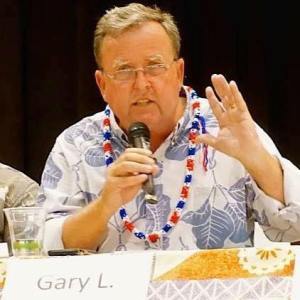
gary at mic with lei

Posted in Uncategorized | Leave a comment

With the stroke of a pen, the power of a majority

The power of a single legislator whether on the council, at the state legislature, or in the U.S. Congress, is limited to that of being one voice and one vote.  They may introduce bills (proposed laws), they may cast a vote on those bills and they may use their voices to inform and educate.  As an individual legislator, they may also convene meetings and “shine a light” into the often dark recesses of government operations and the decision making processes.

But the true power of a single legislator comes with their ability to form alliances with others.  We are taught in school that majority rules – and this is the single most important truism of a democratic government.

On County Councils, we don’t need 7 or 9 (depending on the County) council members to agree, we actually only need 4 or possibly 5. In the State Senate, the magic number is 13 out of 25 and in the State House, it’s 26 out of 51. In the U.S. Senate, the critical number is 51 of the 100 and in the U.S. House, it is 218 of 435.

Alone, a legislator can be a strong voice and sometimes a strong vote – but when part of a majority they can move mountains (assuming, of course, that majority wants to move mountains).

With the stroke of a pen a majority in the Hawaii State Legislature could:

  • Solve the problem of Hawaii’s dependence on importing 90% or more of our food, by requiring all public schools, prisons, and hospitals to only purchase locally grown food.  Think about what a boon this would be to the local farming and ranching industry.  Instantly farming for many would “make sense” and more importantly it would make money – and of course that money and that food would stay in our local economy.
  • Improve the lives of all low income working people in Hawaii, by gradually increasing the minimum wage to a living wage, mandating a paid family leave policy and aggressively funding a local “earned income tax credit”.
  • Expand and diversify our economy by providing aggressive support and tax credits to small locally owned businesses.  Increase taxes on big box stores, banks, insurance companies, luxury resorts and other large businesses with off-shore ownership.  These businesses export profits,  often avoid the payment of local state taxes and have a bad history of paying substandard wages to local workers.  They need to pay more and those funds used to support genuine small, local family-owned businesses.
  • Require all rental car companies to utilize only electric or ultra high mileage vehicles.  This would decrease Hawaii’s carbon foot-print and dramatically increase the market and support for electric vehicles – statewide. This would also increase the demand for home roof-top photovoltaic (PV) and cause the proliferation of charging stations – making electric vehicles even more attractive and affordable.
  • Increase visitor/air-travel fees/taxes to offset the greenhouse gasses generated by the travel industry, and utilize those funds to create “green jobs” focused on watershed restoration and natural resource protection.

And of course, a majority could also completely restructure the management of Maunakea, increase teacher pay, reform our criminal justice system, legalize cannabis, create affordable housing by increasing density in our urban centers while upgrading infrastructure AND reform lobbying and campaign spending regulations.

The naysayers will say: “Where are you going to get the money to do all of this?”

There is of course money, though it will have to be pried from the cold, very live hands of the uber-rich, foreign pension funds and the multinational corporations that are currently making billions off the exploitation of our natural resources, our indigenous host culture, and local families. There is no shortage of people, businesses, products, and practices – that do not pay their fair share of the societal and environmental costs they put upon the planet.

Too much too soon? The answer is creating public policy that both phases in the change incrementally, but also ultimately achieves the goal. A majority could pass laws today that mandate 100% local foods served in schools, 100% of rental cars being electric and 100% of Hawaii’s workers earning a living wage but is achieved over the next decade – 10% increase per year over 10 years. To be clear, we need a mandate – not simply goals and aspirations.

This is the power of the majority, and this, of course, should be our goal as citizens – to elect and support a majority of legislators at the county, state and federal level who put people and the planet first, who recognize the urgency of the moment AND who are willing to act accordingly.  

Gary Hooser – http://www.garyhooser.com

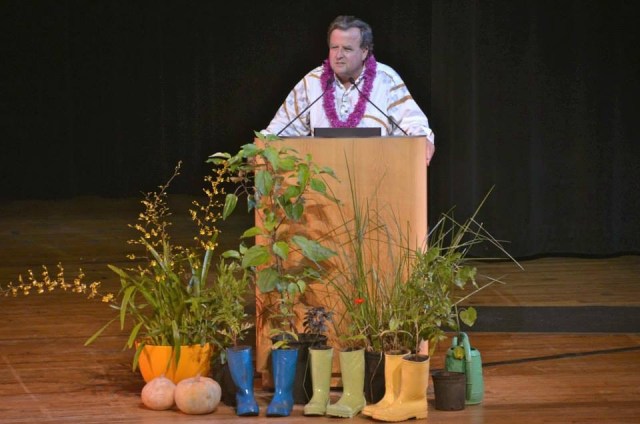
nice photo of hooser on stage with boots in forfround


Posted in Uncategorized | 4 Comments

4 powers every legislator has, and one they definitely don’t

What exactly does my legislator do?  What power do they have and what exactly can they do, or not do?

The quick and dirty answer is:

  1. They have the power to pass laws (but not really).
  2. They have the power to keep laws from passing (if they are brave, have their facts together and know how to talk- or they are a committee chair)
  3. They have the power to convene (but often they do not realize they even have this power or the power of this power)
  4. They have the power to “shine a light” (if they are brave enough, smart enough and articulate enough to actually do it)
  5. They do not have the power to change a light bulb or pave a road.

Passing laws:

Most people equate the job of being a legislator to that of being a  “lawmaker”.

However, in terms of actually passing into law a new idea or change of public policy, an individual legislator is limited to the power of “bill introduction”. Bills are proposed laws that in theory are put into the legislative pipeline for public review. The ability to introduce a bill is clearly a significant power in what is supposed to be a marketplace of ideas, but it’s a long, long way from passing something into law.

The power to actually pass a new law is held by the majority.  And of course the mayor, governor or president must also agree (or be overridden by a supermajority).

Individual legislators, of course, are needed to “hold a majority together”.  Therefore that proverbial “swing vote” (that one vote needed to gain a majority position and ensure the passage of a measure) can be critically important. Individual legislators positioned as the “swing vote”, can thus possess significant individual political power – possibly even shaping the final outcome of the proposal.

Power to kill bills:

It is actually easier (IMHO) for an individual legislator to influence the killing of bills, than passing one into law. 

IF a legislator is willing and able to publicly articulate why a particular piece of legislation is “bad”, and IF they can substantiate their position with credible facts and research- a single legislator can sometimes sway the majority opinion such that the proposed bill either is amended to “fix” its deficiencies or is killed. Note “bad” is in the eye of the beholder.

The most notorious example of a single state legislator’s ability to kill a bill is tied to the power of a committee chair. Through the power granted to them by the majority, individual committee chairs can and do kill bills in a myriad of ways, the most common of which is simply by refusing to schedule a hearing. 

Power to convene:

The individual legislator has the power to “convene” – to simply call a meeting (official, unofficial, public or private). 

The power to convene is an important but often underutilized power that many new legislators do not even know they possess. The truth is that if a legislator from the state, county or federal government requests a meeting with any agency or organization (public, private, profit or nonprofit)- they are normally granted the opportunity to meet. This power can be used simply to educate the participants and or to bring various interests, groups, and individuals together in order to address common issues. 

The power to shine a light:

Last and most certainly not least – individual legislators have the power to “shine a light”- the power of the soapbox. Legislators have their title and their responsibility as voices elected by the people in their district. The media recognizes legislators as a legitimate and credible (until a legislator proves them wrong) voice of the community and will normally listen to and sometimes place their concerns front and center. Whether used to expose wrong-doing or to promote positive and meaningful public policy proposals, IF they are prepared and willing to use it, the power to “shine a light” is often the most important power possessed by the individual legislator.

When asked, the general public will often say that the main job of a legislator is to balance the budget, pave the roads, clean our parks and in general keep our government doing what the government is supposed to do. 

While approving a balanced budget (depending on who is doing the math) is a responsibility of every legislative body, legislators do not enforce laws and they do not manage government employees (other than their own). Generally speaking, the enforcement of laws is strictly the domain of the administrative branch (president, governor, and mayor). 

According to the County Charter, a member of the Kaua’i County Council may not direct any county employee (outside the council) to do anything.  All directions for administrative action must go through the Mayor’s office.  The Mayor is the boss of county employees, not the Council (except of course for Council staff).  Ditto, for the most part – for state and federal legislators.

Individual legislators cannot order a road to be paved, a park cleaned, or even a light bulb to be changed in a government building – those tasks can only be ordered by the administrative branch.

Even when a “majority” of the legislative body (council, congress or a state legislature) agree – the most they can do (outside of seeking judicial action) is request or ask the administration to do something. As a last resort, a majority in the legislative body could use their “budget authority” and/or “audit power” as leverage to pressure the administration to act.

So please remember, the next time you demand that a legislator pave the road, or clean the park or crackdown on crime – that is really not their job.  To be clear, they can be a squeaky wheel on your behalf (and certainly sometimes that is appropriate) but they cannot direct government employees other than their own staff.

At the end of the day, legislators are responsible for making sure the people actually doing the job (the administration) have the resources they need (via passing the budget), for passing new and improving existing public policy initiatives, and for providing public oversight and accountability.

Gary Hooser –

sign up for the Hooser newsletter: http://garyhooser.com/#four

Posted in Uncategorized | Leave a comment

When the electoral paradigm creates a political epiphany

Traditional campaign logic says that candidates should spend their limited resources talking to people who vote, rather than people who for whatever reason, do not.

The so-called “super voter”, is someone who never misses an election and is typically described as a local resident, born and raised in Hawaii, and over 65 years old. The logic goes on to say that the worst person for a candidate to spend their limited time, energy and money on – is the unregistered voter who is often younger, lower-income and disaffected. Further rationale for not pursuing the unregistered voter is that even if a candidate is successful in registering the person, there is no guarantee they will vote and most do not.

While I stand by this basic logic and encourage candidates to focus on those “super-voters”, recent changes to Hawaii voting laws add a new and important twist to the importance of new-voter registration.

Beginning in 2020, all elections will be “vote-by-mail”. This means that every registered voter will receive a ballot in the mail on or about July 21st, and then have until August 8th (Primary Election Day), to review and submit their vote. The ballot must be received by the office of elections prior to or on August 8th.

There will continue to be a limited number of “in-person” voting locations open on election day August 8, but the vast majority of votes are expected to be cast by mail.

Translated: Registered voters (both newly registered and otherwise) do not have to remember to show up at the polls on election day. They will have effectively 15 days (plus or minus depending on mail delivery time) to “remember” to vote. PLUS – candidates will have that same amount of time to “remind” the voters (via door-to-door canvassing and direct mail etc) to vote.

Further Translation: The likelihood of a strong increase in voter turn-out among the newly registered first-time voters (and all voters really), is significant.

Hawaii’s transition to a “vote-by-mail” system presents a new paradigm, and a new opportunity for those who want to support and elect new voices, especially at the state and county levels.

This new way of voting in Hawaii represents an opportunity for community and civic groups to support those candidates who are pushing against the status quo, and who need that extra help – by embarking on aggressive voter registration drives, especially targeting the young and under-represented.

And registering to vote is so incredibly easy to do online at https://olvr.hawaii.gov

In election parlance, small numbers matter and even small percentage increases in targeted demographics (think young people and native Hawaiian) can make a HUGE difference.

After-all, the “super-voter”, or the older establishment voter demographic, is already tapped out. They are already voting and the potential % increase for them, the number of votes they are leaving on the table now, is negligible. Consequently, if the new voter does turn-out (and the research says that this is very likely), then the 2020 election could, in fact, be a watershed event.

The research is clear and consistent.

Studies by Pantheon Analytics examined turnout in Colorado in 2014 and in Utah in 2016…” using each voter’s modeled vote propensity score, we found that low-propensity voters in Colorado dramatically over-performed their expected turnout…The Colorado voters who were predicted to turn out at a rate of 10%, for instance, turned out at a rate of 31% instead…The analysis in this report provides strong evidence that moving to a vote-by-mail system increased turnout in Utah in 2016…When political campaigns and organizations run get-out-the-vote experiments, they are thrilled to see an effect size of even one additional point of turnout. An additional five points of voter turnout — or three points, or seven, or twelve and a half — is an enormous victory for civic participation.” Pantheon Analytics • info@pantheon-analytics.com

In 2017, The Nation reported on “Automatic Voter Registration (AVR)” saying, “Of the individuals who were registered for the first time through Oregon’s new program, a significant portion—67,902, or 36 percent—voted in 2016.”

The responsibility of increasing voter registration falls to all of us. Community groups and nonprofits across Hawaii need to step up, join forces and organize aggressive new voter registration drives targeting those voters who are greatly underrepresented. So long as the effort is nonpartisan and not candidate-specific (as required by law), this is an area where nonprofits can offer significant value.

And yes, there is a method to this madness.
1) Assuming that 36% of newly registered voters will actually vote.
2) Assuming also that the voter registration drive targets the “under-represented” – primarily young and those representing demographics who care deeply about environmental, economic and social justice.
3) Then it is most likely also safe to assume that those candidates who believe strongly about these same issues will also benefit from the 36% of the votes cast by the newly registered.

Voila! A bonafide political revolution in Hawaii.

All it takes is for people to take ownership of their government.

It’s called #reclaimingdemocracy

Posted in Uncategorized | 3 Comments

Be there Sep. 20th – Climate change is real

Please join me, and a whole lot of other people from across the planet – Friday, September 20th (see details at bottom) – Help send a message to policymakers and government leaders everywhere and tell them:

CLIMATE CHANGE IS REAL, IT IS AN EXISTENTIAL THREAT TO OUR PLANET, AND STRONG BOLD ACTION IS NEEDED NOW!

Look it up please (I did) “existential” threat – a threat to our very existence.

Yes, it is serious. And yes, far too many in positions of power and authority have chosen to either look the other way or address the politics of the issue with only lofty vacuous goals, devoid of the bold public policy changes needed to protect the future of our planet.

During the coming week, especially on September 20th – political and government leaders across the U.S. will be offering speeches, press releases, and proclamations galore.

At every level, County, State, and Federal – All will pledge to “take the issue seriously” and to “do something about climate change”. More than likely many will throw in at least a half-promise to “get our county and state off of fossil fuel”.

Each will also praise those who show up to carry signs and exercise their right to free speech. They will say the right words, acknowledge the importance of the issue, and promise to do whatever they can.

It’s up to all of us to hold them to their words. It’s up to all of us to provide the help, and support the political will necessary to make the tough policy changes that must be implemented.

While showing up on Friday, September 20th is critically important, it is only the start. If you believe as I do that climate change is truly an existential threat to our planet – then you must commit to keeping your voice loud and your presence known, front and center.

Those political leaders who want to do the right thing, need our support.

The hard choices needed to slow the rate of planetary warming have political consequences, both positive and negative. As individuals, and as a group we must support those political leaders who support us. Those few who are willing to risk their careers proposing the much needed bold but sometimes politically volatile policy changes, need to know that we have their backs.

The fossil fuel industry and its allies are formidable foes. And make no mistake about it, they are the enemy in our fight to save the planet.

There are lots of strategies to deal with the climate crisis, however, unless the drastic reduction in the use of fossil fuels is a central component – we are fooling ourselves.

We cannot afford to just nibble around the edges, satisfying to some extent our personal need to “do something” while offering our elected leaders “political cover”.

To some, Hawaii’s impact on global warming and climate change may seem insignificant. However, as an island community especially vulnerable to the negative impacts of sea-level rise and hurricanes, Hawaii can and should be a global leader in this battle.

As a community and as individuals there are lots of things we can do. And, with a strong commitment from our government, we can do far more.

We can plant trees and we should. But we should not plant them only to burn them and call the process renewable.

We can voluntarily paint our roofs white to reflect the sun and cool our structures and we should (and I have). But this does not replace requiring via the building code, that all new roofs have a solar reflective coating and thus helping to cool the planet rather than just radiate the heat.

We can drive smaller cars, preferably electric. But without significant additional tax incentives and disincentives, too many of our neighbors will continue to drive Hummers, monster trucks and giant SUVs – putting the small car and its occupants at a disadvantage when there is a head to head competition.

Our State government with the stroke of a pen could phase in a mandate that requires all car rental companies to only rent out electric or other highly efficient automobiles. Tax incentives and disincentives could be used to facilitate the changeover. Imagine the many positive impacts if every rental car on the road in the state of Hawaii was a small electric car.

Our County and State governments could require that 100% of their fleet be electric or otherwise highly efficient. Too often, our Government falls back on “we are trying” or “we aspire to…”. The time for trying and aspiration is long past – it’s time for the County Council and State Legislature to mandate the change.

Taxing the use of carbon or a “carbon tax” is often discussed here in Hawaii but never implemented. The underlying principle that those who contribute the most to global warming and climate change (as measured in their carbon footprint) should also pay the most – is a valid one.

Another valid principle, however, is that politically speaking, raising taxes is probably the most difficult and riskiest vote an elected official ever makes. The excuse most often used to fight against a carbon tax is that it will hurt poor people (which it seems is most of us).

The truth is that a person’s carbon footprint expands with wealth and income. Those with money will travel by air more, have a larger house (swimming pools and air-conditioning, etc) and in general consume far more energy than people of low to moderate-income. Yes, it is also true that low-income households will often drive older, larger and less fuel-efficient vehicles – but public policy initiatives can adjust for this.

The larger truth is that big business, big oil and big cars too often have the political muscle to stop changes in public policy when they fear an impact on their profit margins.

Of course, it is all connected. Whether your focus is on environmental, economic or social justice – left unchecked the increased warming of our oceans and the related climate crisis will and in fact already are exacerbating those many problems and challenges that already weigh heavily on our communities.

Which is why we need you to show up. Climate change is real. It impacts all aspects of our lives and we must send a strong and sustained message to government leaders everywhere. The time for action is now.

What we lack in money for lobbyists and campaign contributions, we can make up in numbers, at the election polls, at the public hearings – and most importantly now – on September 20th.

In spite of the odds. In spite of the enormous threat presented by global warming and the related impacts of climate change – I believe there is hope, and that we can in fact win.

Please join me and many others this coming Friday, September 20 to stand with the youth of today, across our planet – to push back against the powers that be and to fight for a stable, clean, bright future.

Kauaʻi
11:30-12:30pm Highway cleanup at KCC one-stop-center
1-3pm Sign-waving and speakers at KCC
3pm Bike to the Mayor’s office
https://www.facebook.com/events/694144941063574/

Hawaiʻi Island
3-6pm Sign waving at Kamehameha Statue, Hilo
https://www.facebook.com/events/2126259534341794

Maui
9am-1pm #Fridaysforfuture sign-waving at Maui County Building
4pm Rally at UH Maui College Great Lawn
4:30pm Sign-waving on Kaʻahumanu Ave followed by music, youth speeches, tabling and more
https://www.facebook.com/events/507170573189819

Molokaʻi
4-6pm Sign-waving at Molokaʻi Public Library

Oʻahu
4-6pm March from Governor’s Mansion to State Capitol to Honolulu Hale
https://www.facebook.com/events/729514164168461
Posted in Uncategorized | Leave a comment