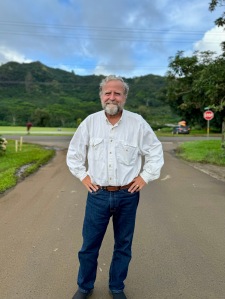
On the complexities of our conversations – words matter.

Either I’m evil or I’m ignorant was the message delivered recently via email. Another scolded me, saying she was offended that I had not responded to her email within three days.

It seems supporting an end to the violence by asking all sides to stop the killing is either a stupid idea or one driven by the devil himself. And not offering an immediate response while traveling and focusing on family priorities during the holiday season — is somehow deplorable and offensive.

Fortunately, the vast majority of email feedback I receive is positive in nature, with even those who disagree expressing their arguments thoughtfully while acknowledging that we might see things differently.

I believe good people can look at the same facts and come to different conclusions without calling each other names, or questioning character, or motives.

We can take them to court, pull back the curtain and expose the wrongdoing, march in the street, carry signs, chain ourselves to bulldozers, and push back hard against the bad guys and bad actions that bring harm to people and the planet – and we should and must do so. But if the aim is to sway the other persons opinion to ours, then words matter.

In my experience, engaging in conversation and debate is only productive when there’s some genuine attempt to understand where the other person is coming from and trying to go to.

Each of us look at the world through a different lens formed from our upbringing and general life experiences. The world-view of someone raised in poverty and extreme hardship is likely radically different from someone else born into a life of privilege and entitlement, and of course the religious faith, the country and time in history you were born in, has a significant impact as well.

Our individual world view is our basic perspective on life and the starting point for every decision and every conversation we have. It’s not necessarily right or wrong, it just is what it is.

When attempting to resolve differences it’s important to try to put yourself into “their shoes” in order to better understand the underlying basis of their conclusions. This doesn’t happen through confrontation or mockery which simply escalates the confrontation and deepens the division.

During these times of seemingly constant turmoil, the words “Peace on Earth, Good Will Towards All Humankind” must be remembered and repeated. Let’s try especially hard at this particular moment in time and into the coming year to be a little bit nicer, more respectful, and more tolerant of each other.

It’s only through de-escalation and reconciliation that conflict and disagreements are resolved.

Whether it’s an argument with one’s children about homework, a community confrontation about development, a political debate on the chamber floor, or international military brinkmanship, ultimately it requires a de-escalation of hostilities for anything productive or positive to be achieved.

Ramping up the dialogue simply ramps up the tempers, backs people into corners and triggers pushback and sometime retaliation.

This is not to say that bad actors and bad actions should not be called out publicly. In fact it’s critically important that we do so.

But we must remember I think, that words matter and we must choose them carefully — especially if our goal is to change that persons mind or a position on an issue.

While I preach here about good communication skills and criticize those who criticize me, I would be remiss to not acknowledge my own weakness in this area. I try my best to call out the bad guys for their bad actions, without making it personal — but admittedly it’s hard when the issue at hand is urgent and people’s lives are impacted.

I get it.

And to restate my thoughts and feelings on the violence, death and ongoing conflict in Gaza — clearly this will only cease when both sides set aside their weapons, the killing stops, the hostages and political prisoners are released, and a third party facilitates and monitors a mutual agreement and compromise.

Without question Hamas militant’s committed terrible, inhumane and criminal actions against innocent civilians on Oct. 7.

But killing every single member of Hamas, and their families, and everyone who lives in their neighborhood, or is a patient in the same hospital, or attends their same place of worship, is not the answer.

The ends do not justify the means.

Gary Hooser

First published in The Garden Island Newspaper 12/20/23

Posted in Uncategorized | Leave a comment

Time Sensitive: Email Testimony needed TODAY – Kauaʻi Coco Palms on BLNR Thursday agenda

Attention Kauaʻi residents especially – Urgent and time sensitive
Testimony should be submitted TODAY Tuesday December 5, 2023 (or ASAP) by directing an email to BLNR.Testimony@hawaii.gov

See my thoughts/testimony below for context and background – but please offer your own thoughts, in your words, based on your experience and knowledge. Short and to the point is fine!

Testimony: BLNR meeting scheduled for 12-7-23
Opposition to agenda item Land Division #6
Re: CocoPalms – 6. Issuance of Term, Non-Exclusive Easements to RP21 Coco Palms LLC, Wailua, Kawaihau, Kauai, Tax Map Keys: (4) 4-1-003:044 and (4) 4-1-005:por. 017; Issuance of Revocable Permit to RP21 Coco Palms LLC and Sale of Lease at Public Auction for Parking and Landscaping Purposes, Wailua, Kawaihau, Kauai, Tax Map Key: (4) 4-1-003:017; and
Immediate Right-of-Entry for Management Purposes to RP21 Coco Palms LLC, Wailua, Kawaihau, Kauai, Tax Map Keys: (4) 4-1-003:044, (4) 4-1-003:017 and (4) 4- 1-005:por.017.

Aloha Chair and Board Members,

I am offering this testimony today as a resident of Wailua Homesteads on Kauaʻi, a grandfather with children and grandchildren born and raised in this ahupuaʻa, the former Director of the Office of Environmental Quality Control (OEQC), former State Senator representing Kauaʻi and Niʻihau, and former 4 term member of the Kauaʻi County Council –

To be clear, this testimony is in strong opposition.

I cannot understand why the BLNR would consider granting any easements, revocable permits, leases, or right-of-entry to an entity that is now under investigation for grading, grubbing, and other destructive activity on state conservation lands without permits AND who has been trespassing on these lands for the past year AND whose intention is to use these state lands to support a resort development without conducting at the minimum an environmental assessment to determine impacts.

This proposal is especially puzzling because a local, credible, Kauaʻi based community organization also seeks to manage these lands for the benefit of the broader community in a manner that protects the significant environmental, cultural, and cultural elements contained within this area.

Therefore to reiterate, this testimony is in strong opposition to this agenda item.

However, in the event any easements, revocable permits, leases, or right-of-entry is granted, I strongly encourage the BLNR to ensure compliance with HRS343 and require at the minimum an environmental assessment fully disclosing potential environmental impacts from the planned use of these parcels as part of the proposed resort development.

An outline of the facts:

1) RP- 21 and related entities are presently under investigation for grading and grubbing and cutting down coconut trees on State land and on conservation lands without the appropriate permits or permission from the State of Hawaiʻi.

2) I have personally witnessed and photographed the grading and grubbing and seen in person the many fresh cut stumps being dug up by workers for the developers.

3) BLNR leadership has already acknowledged that RP-21 has no legal authority nor any permission in writing from the BLNR to intrude upon or utilize the State lands in question.

4) RP-21 on a daily basis operates their equipment upon these same properties. Since they possess no valid State Lease nor any valid RP’s, they are essentially trespassing on State land. They have constructed barriers preventing others from accessing these properties. They also conduct grading and grubbing on the property (without the presence of a qualified archeological observer), and actively utilizes these lands to facilitate and support the ongoing development of adjacent lands – I personally witness this activity on a regular basis as I drive and walk by these properties on a daily basis.

5) Any new lease or revocable permits issued on these lands trigger HRS323 and thus any proposed use that accompanies the granting of any new lease, revocable permit, right of entry, or easement must require an environmental review in order to comply with the law.

6) These lands are situated in environmentally sensitive areas with unquestionable historical and cultural significance. They are located in a coastal tsunami zone, clearly impacted by issues relating to sea level rise, adjacent to wetland areas, currently and historically impacted by frequent flooding, known habitats for rare native birds, and include ancient fishponds and waterways that connect to and ultimately drain into the Wailua River and nearby ocean.

7) The RP-21 and related entities involved in the proposed CocoPalms resort development have unambiguous and specific plans to utilize these State lands to facilitate and support their planned resort.

8) Allowing the use of these State lands in conjunction with the planned resort commercial development will contribute directly to increased impacts on the shoreline, nearshore water quality, and further degrade existing cultural, historical, and archeological elements.

9) I Ola Wailuanui, a community based nonprofit has formally applied to lease and or secure the required RP’s in order to provide appropriate community stewardship of these lands in a manner that protects the environment, honors the historical and cultural significance, and is beneficial to the entire community.

10) Any and all entities that are granted a lease or RP to these lands must be required to comply with HRS Chapter 343 and at the minimum conduct an Environmental Assessment (EA) of their proposed uses and impacts, and conduct a full Environmental Impact Statement (EIS) if those proposed uses and impacts are related to the facilitation of new resort development.

I’m available to respond to questions via email or text but unfortunately I am currently traveling out of the country and unable to attend the meeting in person. This testimony is made on my own behalf. While I fully support its mission and vision, I do not speak on behalf of nor represent I Ola Wailuanui.

Sincerely,

Gary Hooser
808-652-4279
garylhooser@gmail.com

Posted in Uncategorized | Leave a comment

Calling for a permanent ceasefire in Gaza and initiation of negotiations for a lasting peace – Democratic Party of Hawaii State Central Committee – Resolution that passed unanimously on Saturday December 2, 2023

Whereas, All human life is precious and the targeting of non-combatants in a conflict zone is a violation of Rule 1 of customary International Humanitarian Law; [1]

Whereas, Between October 7 and December 2, 2023, armed violence has claimed the lives of more than 13,000 Palestinians and some 1,200 Israelis, and wounded tens of thousands more, the vast majority of which are civilians;

Whereas, Hundreds of thousands of lives are at imminent risk if a permanent ceasefire is not achieved and humanitarian aid is not delivered without delay;

Whereas, Roughly half of the Palestinians killed or wounded during the violence in Gaza are children and International Humanitarian Law requires that all parties to an armed conflict protect children and prevent the commission of grave violations against them, including killing and maiming, attacks on schools and hospitals, recruitment and use of children, abduction of children, and denial of humanitarian access; [2]

Whereas, These children and their families face further imminent threats due to Israeli
government restrictions on food, water, fuel, and other humanitarian assistance being able to reach them;

Whereas, The dismantling of Hamas, a recognized terrorist organization, cannot and should not be achieved at the expense of innocent lives; and

Whereas, The United States Federal Government holds immense diplomatic power to save both Palestinian and Israeli lives; now, therefore, be it

Resolved, That the State Central Committee of the Democratic Party of Hawaiʻi calls on the
members of the Hawaiʻi Congressional Delegation to support the Ceasefire Now Resolution introduced by Representative Cori Bush; and to insist that the Biden Administration call for an immediate, permanent ceasefire, to facilitate the de-escalation of hostilities to end the current violence, to promptly send and facilitate the entry of humanitarian assistance into Gaza, including fuel, food, water, medical supplies, and to begin negotiations for a lasting peace; and be it

Ordered, That copies of this resolution be transmitted to the offices of the members of the Hawaiʻi Congressional Delegation, the U.S. House Minority Leader, President Joe Biden, as well as the chair of the Democratic National Committee.

Adopted via unanimous vote on December 2, 2023

[1] International Committee of the Red Cross, “Rule 1, The Principle of Distinction between Civilians and Combatants,” ICRC Study on Customary International Humanitarian Law, Volume I (Rules), 2005, Cambridge University Press
[2] International Committee of the Red Cross, “Rule 135, Children,” ICRC Study on Customary International Humanitarian Law, Volume I (Rules), 2005, Cambridge University Press

Posted in Uncategorized | 12 Comments

Sunshine reflections that every County Council and every voter might benefit from – regardless of your island or County

Hooray! The Kaua‘i County Council is once again accepting remote public testimony “live” via the internet. Members of the public must sign up via email to testify no later than noon on the day prior to the meeting.

On March 22, 2023, Kaua‘i County became the only county in Hawai‘i in which residents were banned from testifying via Zoom or other remote technology. Here we are 8 months later and Kaua‘i citizens now have that right and privilege restored.

It’s a mystery who exactly ordered the remote testimony to stop and then ordered it to start up again as the item has never been on the council agenda for a public discussion.

The seven individual council members could not have legally discussed this action among themselves because the Sunshine Law forbids any such discussion or decision-making by council members outside of a publicly noticed meeting.

Assuming none of them were willing to break the Sunshine Law, the only option remaining is the council chair must have ordered the March 22 action to prevent Kaua‘i residents from testifying remotely, and then ordered it to start up again recently — without discussing his plans or seeking approval from any of the other council members.

While some may find it hard to believe such a significant action could have occurred without a discussion among the council members, any such discussion would have clearly violated the Sunshine Law Part I of Chapter 92, Hawai‘i Revised Statutes – unless it occurred at a publicly posted meeting.

According to “The Sunshine Law Guide” for State and County Boards – 2022:

“(B)oard members are not allowed to discuss board business with each other outside of a meeting, including by telephone or through email or social media. In addition, a board usually cannot consider at a meeting matters that were not included in its published agenda.”

“(B)oard business cannot be discussed in secret. There must be advance notice; public access to the board’s discussions, deliberations, and decisions; opportunity for public testimony; and board minutes.”

“State and county boards that are subject to the Sunshine Law include the county councils.”

If one believes the Sunshine Law was followed then the right to testify remotely was taken away eight months ago unilaterally by the council chair without any discussion among or approval by council members.

Now it has been given back and also presumably unilaterally without any discussion occurring between council members.

Either members of the council discussed this issue privately in advance of the decisions that were made, or they did not.

It’s water under the bridge I suppose, but in the future I’m hopeful these types of decisions will be made in the full light of day with inclusive and robust public discussions, and of course a vote by council members one way or another.

For today, let’s celebrate our regained power to testify remotely, like every other county in Hawai‘i does.

Here’s the basic info to get you started: county council main website: https://www.kauai.gov/Government/Council

Sign up here to be automatically emailed weekly Council meeting agenda and more: https://www.kauai.gov/Government/Council/Webcast-Meetings

It’s easy. Every week a council and committee agenda comes to your desktop via email, and when you see something interesting, you tune in to watch, learn and be entertained, and/or offer testimony (but you must sign up in advance to testify remotely or submit email testimony 24 hours in advance).

Council meetings deal with important county business and can also be enlightening, as in a “I can’t believe they just said that” kind of way.

Please. Sign up for the email notification, watch the meetings, participate, testify, get involved and, yes, have some fun while you’re at it.

Posted in Uncategorized | Leave a comment

Title: The Politics and Policy of Gratitude

Being thankful and celebrating our own good fortune comes with an obligation to reach out to help others.

In the past, as a way to celebrate and honor the official holiday of Thanksgiving – I’ve taken my children with donations to the Food Bank or to other similar places, hoping to instill in them the importance of social responsibility.

With innocent children across the world at this very moment caught in the cross-hairs of war and destruction – going to the Food Bank today seems so futile. But go we must. While we are at it, we should also reach out, make our calls, and send our emails off to those in positions of leadership and beg them to lead toward a solution that stops the killing.

Yes, we need to remind ourselves and our children of just how lucky we are. And we must step forward and use our own good fortune to help others.

There are many challenges and many ways to help. The good news is that when we do something positive to help others, we feel good. This in turn motivates us to do more.

Aligning with others toward a common purpose is probably the most rewarding path forward. Service and fellowship is a powerful combination (hat tip to my friends in Rotary). Joining a local service club or advocacy organization provides an important social connection with others in the community who feel the same desire to help make our world a better place.

Please, use the Thanksgiving Day holiday as a time to be thankful AND as an excuse to take some meaningful action that helps the less fortunate and our planet. Call, volunteer and give to the Food Bank, your local Rotary Club, the Sierra Club or Surf-Rider Foundation, or perhaps support the creation of much needed affordable housing with PAL (Permanent Affordable Living), or Habitat for Humanity.

Helping others face-to-face is where the rubber meets the road and volunteering your labor and your time is best (for you and for the cause). But of course every nonprofit organization needs your financial support as well. Whether that be $2, $20, $200, $2,000 or $20,000 – we each have the capacity to give something and every little bit helps. So give what you can. Please. Today. Now.

If you’re not feeling like a social butterfly and your personal finances are a mess, then grab a trash bag and walk the beach on your own, with your children and/or the neighborhood kids. Pick up the plastic, the trash and the drift nets. Teach them about the importance of doing our part as individuals to help clean our environment, and set a tangible example.

Don’t just talk about it.

The answer to making our community and planet a better place is each of us, as individuals, taking some action that leads down that path. Standing at the intersection fretting about it gets us nowhere. It’s only when we do something, some actionable step that takes us toward a more positive future – will we get better and feel better.

There is no shortage of needs, that’s for sure. We have friends in need in West Maui, and other friends living in their car down at the harbor in Poipu. Some of us have family in the Ukraine and others in Russia. I have close friends who are rooted in Israel and others who I love dearly – have family living in Gaza.

We are all related and we only have one planet – I’m thinking we need to remember this and move forward together thankful for what we have and where we live, and united in our efforts to make things better.

Gary Hooser
Published in The Garden Island Newspaper 11/22/23

Posted in Uncategorized | Leave a comment

Hawaiʻi – A Blue State Charade

Am wishing today, we were more like Minnesota.

Yes, Minnesota.

The 2023 legislature in Minnesota, with only a one-vote “blue majority” in the Senate, accomplished in a single year more than our own “super blue” Hawaiʻi legislature has accomplished in the past decade. Minnesota passed legislation that included; free breakfast and lunch for all children in school; a state-run paid family and medical leave program; legalized recreational cannabis; free in-state college tuition; a reduction of taxes for low and middle-income households; a ban on PFAS “forever chemicals”; codified abortion rights; boosted funding for schools that includes indexing per pupil formula funding to the rate of inflation; and more, much more. See the full list and description here: https://rb.gy/i0n30f

They passed all of this legislation in a single 2023 legislative session with Democrats holding only a two-vote majority in the House and a one-vote majority in the Senate.

“We set out at the very beginning of session with our top 30 goals, introduced jointly with the House and the Senate. And as of the end of the day, we are going to pass the entirety of our top priorities with the House and Senate,” said House Majority Leader Jamie Long, of Minneapolis, told the Associated Press.

Kudos to Minnesota!

Tell me now, why is not Hawaiʻi, with its Democratic governor and super blue legislature accomplishing similar public policy milestones?

If Speaker of the House Representative Scott Saiki, Senate President Ron Kouchi, House Finance Chair Representative Kyle Yamashita, and Ways and Means Chair Senator Donavan Delacruz (all Democrats) wanted to pass these types of measures it would happen.

Just like in Minnesota.

But it doesn’t happen because the core Democratic Party platform priorities are either not important to them, they are afraid to take political risks, or they are just lazy and complacent.

They want to wear the brand and carry that “D” trademark with them to the ballot box, but when push comes to shove, they will side with maintaining the status quo every time.

These 4 legislators collectively control the outcome of every single bill that’s introduced. They serve at the top level because a majority of the legislative body elects them to those positions of leadership. So, it stands to reason that this same majority of Hawaiʻi legislators – are also either DINOs or just unwilling to buck the good ole boy system. They prefer instead to go along to get along. Inside the building, it’s called “playing the long game”. I wonder sometimes what exactly that long game is because it doesn’t ever seem to come to an end.

Meanwhile, people are sleeping in gutters and doorways, in the literal shadow of multi-million dollar homes and condos.

There is no shortage of wealth in the islands. The large corporate landowners, absentee foreign real estate investors, and hotel/resort operators are not fleeing our shores because taxes are too high.

What’s lacking is not money but rather the political will, and the core values needed to tackle our many challenges.

Elections matter. On August 10th, let’s unite to elect leaders at all levels who care about our most pressing challenges, are willing to go to bat for the community, are not intimidated or swayed by big money, and feel the same urgency and need for change that we do.

Let’s create a “Minnesota Miracle” here – Hawaiʻi style.

As the inimitable and totally awesome Nina Turner is fond to say, “Any ole blue won’t do”.

P.S. If you are considering throwing your hat in the ring (any island and any race), have roots in the community, and believe as I do that our legislature should be more like Minnesota 😉 – please let me know. I’d love to meet up and talk more.

Gary

Posted in Uncategorized | 1 Comment

A Day in Court – Trials, Tribulations, and MSJ’s

I had the privilege of attending a court hearing on Oahu last week relating to the proposed Kaua’i Coco Palms Hotel development.

It was a surreal, informative, sad, but yet still hopeful morning.

On one side of the courtroom (literally and figuratively) was the Utah developer’s Hawaiʻi attorney sitting with the attorney for the State of Hawaiʻi representing the Department of Land and Natural Resources (DLNR).

They argued strongly in support of letting the developer use State-owned lands to support the resort development in spite of the lack of an Environmental Assessment (EA) or Environmental Impact Statement (EIS) as required by HRS 343 (the primary Hawaiʻi law requiring environmental review), AND in spite of the undisputed fact that the developer does not have an actual legal lease or permit to use the State lands in question.

On the other side sat two public interest attorneys representing community-based interests intent on preserving environmental, cultural, and historical elements connected to the property.

It was mind boggling really. 

About 10 community members most of whom had flown over from Kaua’i were in attendance. This was their kuleana. They had worked hard to get this day in court.

Not one person was there supporting the developer’s position against increased environmental review, except of course the State attorney representing the State agency responsible for protecting the environment. 

They argued back and forth.

When the public interest attorney stated the property in question was located in an area susceptible to sea level rise and thus in an “especially environmentally sensitive area” – which required by law at the minimum an environmental assessment, the other side actually said the sea level claim “was not supported by expert testimony”.

The parcel of land being discussed is located directly across the street from the beach in a tsunami zone. One doesn’t need an “expert” to determine whether these lands are susceptible to sea level rise.

I’ve personally seen the highway fronting the property covered in sand washed up by the waves after a large storm surge.

The developer and the DLNR attorney both also said the property had an inconsequential impact on the resort development and was used only for parking, thus its use involved minimal environmental impacts. According to them, this was all much ado about nothing.

In reality, the State-owned parcel in question abuts sensitive conservation lands that include a historical fishpond AND the parcel is actively being used as a staging area for the hotel demolition and construction. In addition 50 of the hotel’s required parking spaces are located on these public lands.

The facts are clear and unambiguous. This State-owned land is located in an especially environmentally sensitive area AND part of the resort development, thus an HRS 343 environmental impact review is required. 

But “no” said the attorney representing the State agency responsible for protecting the environment in lock-step with the Utah developer’s attorney – both doing their best to beat the community who seek only to protect the public interest. 

In spite of the apparent odds, I remain hopeful.

The judge in this case clearly had done her homework, clearly knew the law, and from her actions and comments that day – seemed balanced in her approach to the issues at hand.

In addition, the Board of Land and Natural Resources (BLNR) and its Chair have shown a willingness to listen to our community, and to enforce the law. At this very moment, they’re investigating this developer for grading, grubbing, and dumping on conservation lands without the required permits. They’re also investigating the cutting down of countless coconut trees on State-owned conservation lands, without permission.

My hope is the judge will rule in support of ordering the BLNR to require an HRS343 environmental review (EA or EIS). My further hope is the BLNR will recognize its first responsibility is protection of the resource, then the publics use, and commercial use shall be considered only if it does not conflict or interfere with public use and resource protection. (1998 DLNR policy)

Note to my friends reading this who have the capacity to help: While the public interest attorneys work for a very modest fee, Iolawailuanui does have ongoing legal expenses that must be paid and an online contribution of any amount would help tremendously.

Note to those who work with HRS343 – It is critically important to understand that just because an action is on the “exemption list” doesn’t mean it is automatically exempt. “All exemptions under subchapter 8 are inapplicable when the cumulative impact of planned successive actions in the same place, over time, is significant, or when an action that is normally insignificant in its impact on the environment may be significant in a particularly sensitive environment.” Section 11-200.1-15 – General types of actions eligible for exemption

Posted in Uncategorized | 4 Comments

Lawmaking 101 – Tools of the trade

Rules and regulations, mandates, outright bans, plus financial incentives and disincentives – These are the primary tools used by lawmakers and administrators to accomplish public policy goals needed to preserve and protect “the commons” – our health, natural environment, social justice, and balanced economic interests.

It amazes me when I hear politicians say, “There’s nothing I can do about that issue/problem (fill in the blank)”. Any who say this are either ignorant of their basic authority, politically risk-adverse, don’t really want to confront that issue, or just plain lazy.

Yes, a majority of any legislative body is needed to pass new laws but many tools are available. While the administration cannot pass laws or change the tax structure on its own, they do have the power of “decree” and can change/amend many rules without legislative approval.

If a certain activity is seen as harmful either directly to the public health such as the quality of our drinking water, or perhaps harmful indirectly to the social fabric of a community such as a shortage of affordable housing – policy-makers will or should use these tools to reduce or eliminate the harm.

The first line of attack is usually basic regulation. Reporting requirements for pesticide use is required so the public is informed as to the potential exposure and health risk. Vacation rentals can be regulated by allowing them only in “visitor destination areas” or perhaps only X number of permits may be issued.

Regulations govern the basic standards of building construction, water quality, safety inspections, reporting of pesticide use, food safety standards, and worker protection regulations. Like it or not, government rules and regulations touch just about every aspect of our lives.

If the harm caused by particular activity is extensive a “ban” or “mandate” is often implemented. Examples: A specific pesticide may be banned from use. The short-term rental of residentially zoned properties may be prohibited. Jet skis or other high-impact commercial activities may not be used in certain areas. The law says you must wear a seatbelt, that you cannot drink and drive, cannot block public easements to the beach.

Bans are often implemented on a “moving forward” basis and sometimes but not always those already engaged in the targeted activity are “grandfathered in” and allowed to continue for limited time periods – so as to minimize the negative financial impacts that might result from immediate enforcement.

Tax policy is an effective tool in situations where a ban or mandate is not possible and/or basic regulations are not sufficiently doing the job of limiting public harm.

Government levies various taxes on different things at different levels. Liquor and cigarettes are taxed differently than milk and eggs. Owner-occupied homes, investment properties, businesses, and agricultural lands are all taxed differently as well.

The State and County may not be able to ban “foreigners or nonresidents” from buying up our local housing inventory, thus driving up prices and driving out local residents – but they can as a disincentive raise taxes on those properties to a level that cause offshore investors to think twice before purchasing homes that would otherwise be occupied by local residents, AND would generate additional revenue to support the construction of new affordable housing.

Conversely, government can, should, and in many cases does, provide tax incentives that encourage homeowners to rent their properties at affordable rates.

Bans, mandates, regulation, tax incentives and disincentives are all important tools. Individually and collectively these tools can be used to stop or significantly reduce just about any harmful activity impacting our community. So don’t let politicians who prefer to play it safe, tell you otherwise. Remind them please that there are many ways to bake a cake…(we will leave cats and their skins out of the conversation please).

Tell them also, enough already, use your brain, do your homework, figure it out – just do it. Of course, say this nicely (nicer than I’m saying it here) and offer to help them figure it out and generate the community support needed to pass something worthy into law.

published in The Garden Island 11/08/23

Picture of me slaving away at my office –

Posted in Uncategorized | 2 Comments

Policy, Politics, Ethics and Avocados

As many of you know, I’ve taken to walking 5 miles a day. It’s a fabulous habit. It provides valuable exercise of course, but it also gives me two hours of peaceful solitude and outdoor “thinking time.”

Where am I going with this, you ask? How does this relate to policy and politics?

Hang in there please. I’m getting to it.

As I walk by the yards of neighbors, I often see trees loaded with avocado, mango, ulu, banana, papaya etc. Sometimes the fruit hangs over the public easement, and sometimes the fruit has fallen to the ground.

As a fun and frivolous exercise (I’ve obviously got too much time on my hands) I posted the below on FaceBook recently and the response has been both humorous and thought-provoking.

FB Post: Moral dilemma: If you’re walking through the neighborhood and see a beautiful ripe avocado freshly fallen from a neighbors tree but landing outside their fence, is it fair game to scoop it up and take home? #askingforafriend

A representative sampling of the comments:

Philosophers have debated this for centuries. See Plato’s “Avocado Treatise”… My take? Grab ’em, eat ’em.

Ripe and on the ground should be fine. If not, it will just go to waste. I will be surprised if anyone, even your neighbor will be angry if you pick up a freshly fallen fruit outside their property.

My dad told me an old Japanese saying: “Don’t adjust your hat under your neighbor’s tree.” I asked him what the hell that meant. He said don’t even engage in suspicious activity that in this case might look like you were putting fruit in your cap even if you were just adjusting it and not stealing fruit from your neighbor. So my dad would probably tell you not to take it because your neighbor might think you picked it from his tree and even if he didn’t say anything he would think you were a thief.

“Windfalls” on your side of the fence are yours.

Grab um before the chicken and bugs. Fair game!

You have a legal right to that avocado. But it’s still not yours. You didn’t grow it, you didn’t water that tree. The moral compass in you should be compelled to knock on that door and ask if it would be ok with the person who did nurture that tree.

My neighbor has a mango tree, I see it all the time, people coming up and just taking when maybe he didn’t get to it fast enough. Just because you can take it, it doesn’t mean you should.

Easy one. Pick it up, knock on the neighbor’s door and use the opportunity to do good, meet someone new and spread aloha.

Mine, mine and mine. Besides they didn’t see it fall, and it’s not in their yard.

Under Hawai‘i case law, the courts have erected an invisible shield going to the sky at the property line. It doesn’t matter where the roots and trunk are, anything over the property line, including fruit and branches belongs to the owner of that side of the property line. If it’s public property then it belongs to the public. I don’t see it as a moral issue, just a legal issue.

Scoop um!

Grab and go! Don’t look back. That avo just fell for you! There are now 100 comments, and counting.

While some may think it’s all very silly and we are way “over thinking” this, I personally find the discussion fascinating.

In the past, I’ve mostly walked past those avocados, a bit fearful I’m crossing some line of ethical/moral behavior. In the future I’ll look for an opportunity to connect with the neighbor, and perhaps talk story a bit.

Of course the moral of the story is that we should follow the law and trust our na‘au. Remember, “just because you can doesn’t mean you should.”

Gary Hooser
First published in The Garden Island newspaper October 25th, 2023

Posted in Uncategorized | 2 Comments

Affordable Housing: Yes, in my backyard!

Yes, in my backyard! Putting affordable housing in my backyard is totally fine, and if government just gives me a little help — I’ll build it myself.

Like tens of thousands of homeowners across Hawai’i on every island, I’m allowed by law to build behind my existing home an additional dwelling unit (ADU), a guest house, ohana unit, or an additional rental unit (ARU) (different county’s call them different names).

I’d love to build a small rental unit for family (or for my wife and I when we get old) and/or to rent out for some extra retirement income.

Because Kauaʻi County offers property tax breaks for owners who rent at affordable rates, and because I want to do what’s right for family and community, I’d be happy to keep the rent of this new unit at truly affordable levels.

The law however requires me (and everyone else) to upgrade my cesspool to a septic system which could add up to $50,000 or more to the cost of construction.

If the state of Hawai’i would cover the first $50,000 of the costs via an affordable housing construction grant, thousands of existing homeowners across the island chain (including myself) would jump at the opportunity to build a little ohana unit out back.

Of course any such state grant must have strings attached to ensure that rents on the new unit remain affordable and short-term vacation rentals, and speculative sales, are prohibited.

Yes, if the state would help existing homeowners pay for that cesspool conversion/expansion or other startup construction costs, many would jump at the chance to build that little rental.

Better yet, the state could partner with the county and offer a “twofer.” For those affordable ohana units that break ground within one year and complete construction within 24 months (or whatever time frame is reasonable), both the county and the state could kick in $50,000 for a total $100,000 benefit.

Yes, strings must be attached to ensure long term affordability. But, a $100,000 incentive to help with construction costs would be a huge motivator for local residents to do what they’ve always wanted to do anyway, build that ohana unit in the back. And build it now.

Think about the benefits.

There’s no need for immediate massive infrastructure upgrades that take decades to complete because these new homes are disbursed across existing neighborhoods.

There are almost zero environmental or cultural impacts for the same reasons.

There’s no need to suspend any law whatsoever.

The financial benefits of this affordable housing construction subsidy would go into the pockets of local residents hiring local contractors, and not exported to off-island developers hiring off-island contractors.

Zero land need to be rezoned, there’s zero increased urban sprawl, and zero loss of valuable agricultural lands.

To put icing on the cake, the entire thing could be structured so it’s “risk free” for the county and state government.

The state could provide its $50,000 as a low interest loan that converts to a grant upon completion of the affordable unit (with appropriate affordability protections in place).

All or a portion of the county’s $50,000 contribution could be via a long-term property tax credit, on taxes that the County would not be getting anyway unless the new unit was built.

Tell me please, what’s there not to like about this?

Yes, it leaves all of the big developers and big landowners out, and provides tangible financial help to regular local residents. But that’s what makes the whole idea even more better.

Gary Hooser
originally published in The Garden Island newspaper, November 1, 2023

To be clear:
1) The State and County governments must move forward aggressively to invest in major sewage treatment – wastewater infrastructure in those areas not now served. Individual septic systems and cesspools are not an acceptable long-term solution.
2) The above proposal seeks to accelerate the construction of affordable housing in existing residential areas that already permit the construction of a second unit and does not seek to expand the areas where second units are currently permitted.
3) The above proposal is not intended to be the only solution, but one of many things that can and should be done to increase the availability of affordable housing.

Posted in Uncategorized | Leave a comment